
The One Health Poultry Research Center is organizing discussion sessions focusing on gender issues in research activities and within the research hub. Below are several reflections on the challenges faced by women scientists from one of our research groups.
As society develops, Vietnamese women are gaining increasing opportunities to participate in and contribute to the country’s comprehensive development. They are continuously affirming their roles and positions across almost all sectors, including scientific research and development.
In Vietnam, women researchers account for nearly half (46%) of the country’s total scientific research workforce. Approximately 20% of research projects and programs are led by women. Fields with high female participation include sociology, biology, agriculture, chemistry, public health, and medicine — all of which are also research areas within the One Health Poultry Research Hub.
ENCOURAGING WOMEN’S PARTICIPATION IN SCIENTIFIC RESEARCH
In Vietnam, gender equality in science and technology is recognized as one of the eight key priority areas under the Law on Gender Equality enacted in 2006. Accordingly, men and women are entitled to equal access to science and technology training programs, equal opportunities in publishing scientific research results, and equal rights in inventions and innovations. Women are encouraged to participate in scientific research, and there are currently policy proposals aimed at prioritizing women in scientific education and research training in order to foster a modern and democratic research environment.
Each year, awards such as Kovalevskaia and L’ Oreal- UNESCO These awards are dedicated to outstanding female scientists, both individuals and research groups, in recognition of their excellence in scientific research. They aim to honor and acknowledge women’s contributions to society. Scholarship funds and research grants are also provided to outstanding female students at universities, helping to inspire passion, dedication, and enthusiasm for scientific research among the younger generation of women researchers.
Contributions to Development
Vietnamese women have made significant contributions to research and development, thereby supporting the country’s sustainable economic growth and the protection of public health.
In the field of agriculture, Prof. Dr. Nguyễn Thị Lan, Director of the Vietnam National University of Agriculture (VNUA), one of the partners of the One Health Poultry Research Hub, received the 2018 Kovalevskaia Award for her outstanding agricultural research, including the development of a rapid diagnostic kit for Porcine Reproductive and Respiratory Syndrome (PRRS) in pigs, as well as several microbial products (biological bedding systems) used in livestock farming to improve productivity and reduce environmental pollution.
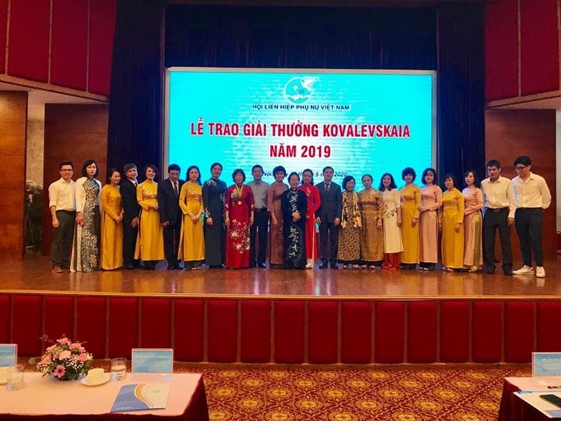
In the field of healthcare, a researcher affiliated with the Hub, Assoc. Prof. Dr. Nguyễn Lê Khánh Hằng, Deputy Head of the Department of Virology at the National Institute of Hygiene and Epidemiology (NIHE), together with colleagues, has achieved significant success in the research and surveillance of Avian Influenza viruses, Seasonal Influenza, and is currently involved in the research and monitoring of SARS-CoV-2. The 2019 Kovalevskaia Award was awarded to female researchers at the NIHE virology laboratory for their outstanding achievements in influenza virus research aimed at reducing the burden of disease and contributing to the protection of public health in Vietnam as well as in other countries around the world.
There are also many other women scientists who have achieved remarkable success in various fields of research. Their scientific accomplishments have been recognized and honored through prestigious awards both domestically and internationally.
Outdated Perceptions
The greatest challenge facing women in scientific research today stems from outdated misconceptions within families, communities, and society. In Vietnam, the traditional notion that “men build houses while women build homes” still persists. As a result, many people continue to believe that a woman’s primary responsibility is domestic work, including cooking, cleaning, laundry, childcare, and caring for the elderly, while men are expected to focus mainly on their careers and earning income.
Today, an increasing number of women are participating in scientific research; however, their work is often more demanding than that of men because they are expected to balance both scientific responsibilities and family duties effectively.
Moreover, gender discrimination and the mindset of “valuing men over women” still persist in certain parts of society. Many people continue to underestimate women’s capabilities in scientific research and leadership roles. This not only limits women’s access to higher education but also affects the selection, evaluation, and appointment of female researchers, thereby hindering women’s career advancement and professional development.
Women and the Sustainable Development Goals
In the coming decade, one of Vietnam’s sustainable development goals is to cultivate a generation of women intellectuals capable of rapidly accessing advanced global knowledge and technologies in order to integrate with worldwide scientific and technological trends.
Today, an increasing number of Vietnamese women are participating in international projects and attending scientific forums around the world. The Vietnamese partners of the One Health Poultry Research Hub — NIHE, VNUA, National Institute of Veterinary Research (NIVR), Natinal institute of Animal Science (NIAS), và French Agricultural Research Centre for International Development (CIRAD) — all have female staff members participating in the research. The Hub’s research team in Vietnam, with 70% female researchers, is collaborating with international researchers across various fields within the One Health framework. The Hub’s research outcomes, including the contributions of female researchers in Vietnam, will help reduce health risks associated with intensive poultry farming for both humans and poultry in Vietnam and worldwide.
By Hoa Pham
Leave A Comment