VIETNAM OFFICIALLY LAUNCHES ITS DOMESTIC CARBON EXCHANGE
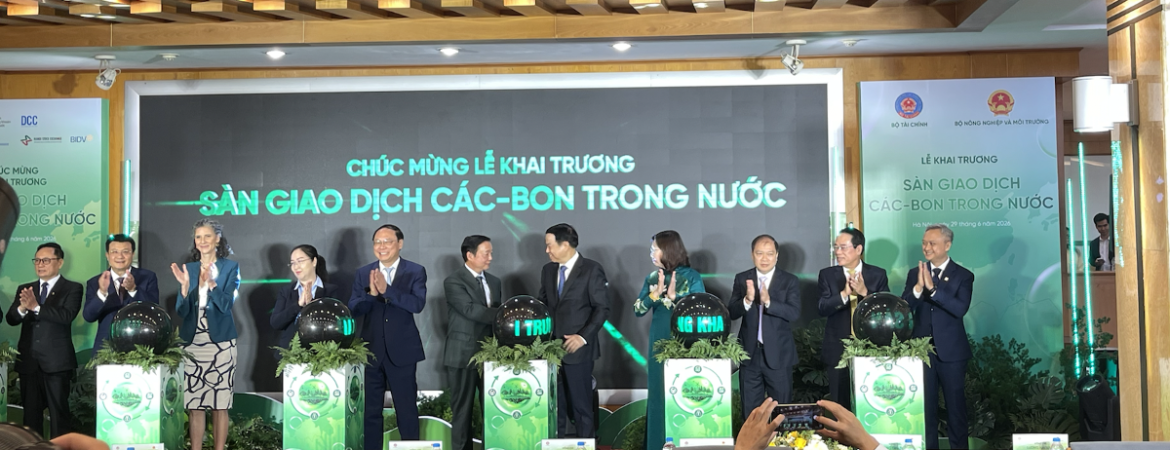
On June 29, 2026, the Ministry of Finance, in collaboration with the Ministry of Agriculture and Environment, officially launched the domestic carbon exchange, marking a significant step forward in Vietnam's efforts toward environmental protection and sustainable economic development. The two main commodities listed and traded on this exchange are greenhouse gas (GHG) emission allowances and carbon credits.
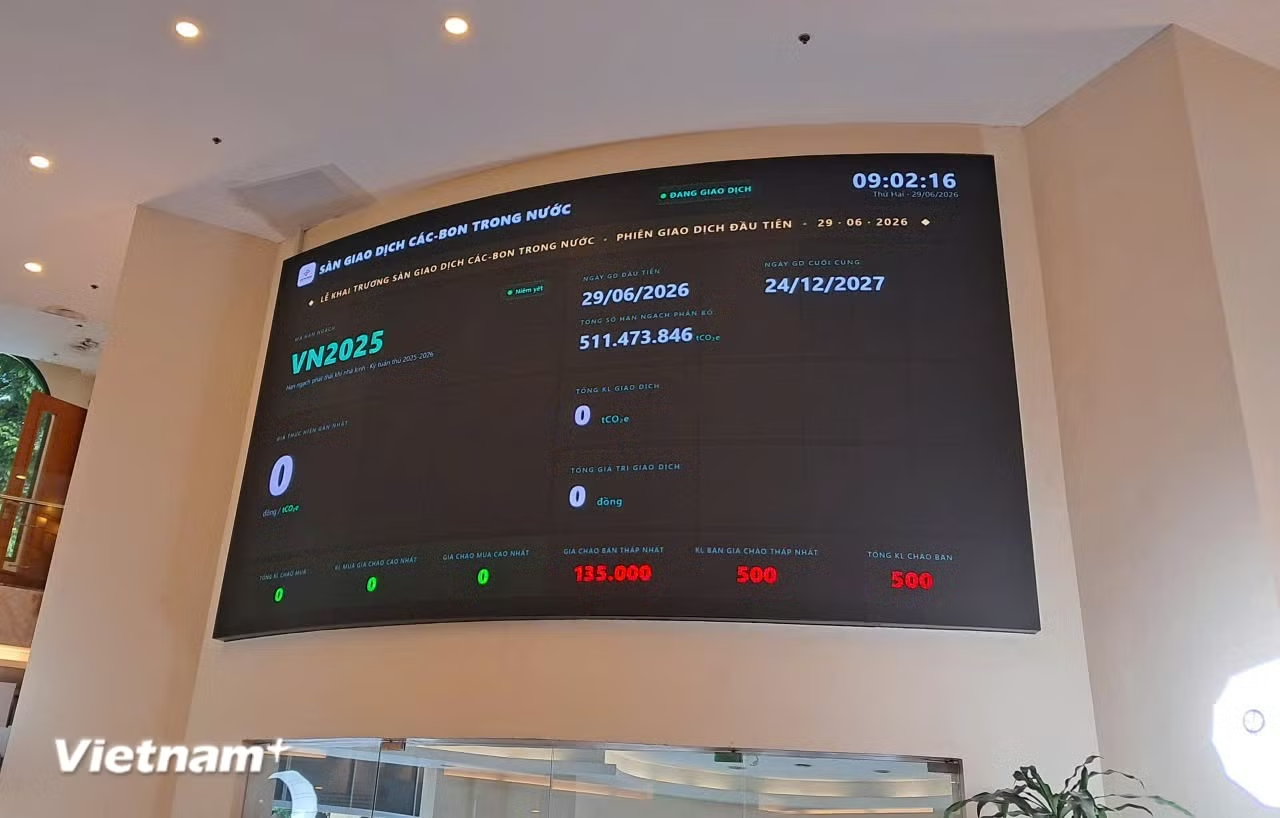
Established under Decree No. 29/2026/ND-CP issued on January 19, 2026, the exchange showed positive signs right from its opening session. During the first allocation period (2025-2026), 511 million tons of CO₂ equivalent (tCO₂e) were allocated to 110 facilities belonging to 92 key enterprises across three sectors: thermal power, iron and steel, and cement. The matching prices recorded on the first day ranged from 130,000 VND to 136,000 VND per tCO₂e.
Source: https://www.vietnamplus.vn/viet-nam-chinh-thuc-khai-truong-san-giao-dich-carbon-trong-nuoc-post1121082.vnp
Previously, carbon credits in Vietnam were primarily sold abroad through intermediaries due to the lack of domestic demand. However, the inception of this exchange has established a direct connection channel, helping to reduce transaction costs and stimulate investment in credit-generating projects. The supply of carbon credits comes from projects such as afforestation and reforestation, renewable energy development, low-emission agriculture, and waste management. Nevertheless, to be eligible for trading on the exchange, these credits must meet quality standards, fall under the crediting and offsetting mechanisms of the Paris Agreement (Articles 6.2 and 6.4) or domestic mechanisms, and must have been issued from January 1, 2021, onwards.
The operation of the carbon exchange directly ties environmental protection responsibilities to the economic interests of enterprises. Specifically, facilities that exceed their emission limits will have to purchase allowances from other entities or buy carbon credits to offset their excess emissions (capped at 30% of their allocated allowances). Failure to comply will result in administrative penalties. Conversely, this creates an economic incentive for businesses to innovate their technology, reduce emissions, and generate additional revenue by selling their surplus allowances. Furthermore, participating in the market helps enhance brand reputation and meet the stringent green growth criteria of foreign direct investment (FDI) inflows and international importing partners.
According to the roadmap, the market will continue its pilot operation until the end of 2028 and officially operate nationwide starting in 2029. In the future, the exchange is expected to become a crucial component of the national financial market, effectively mobilizing resources for green growth and sustainable development.
For more details, please visit: https://mae.gov.vn/chinh-thuc-van-hanh-san-giao-dich-carbon-doanh-nghiep-mua-ban-gi-22188.htm
Leave A Comment