International support for the circular plastics economy in Southeast Asia
1. Context
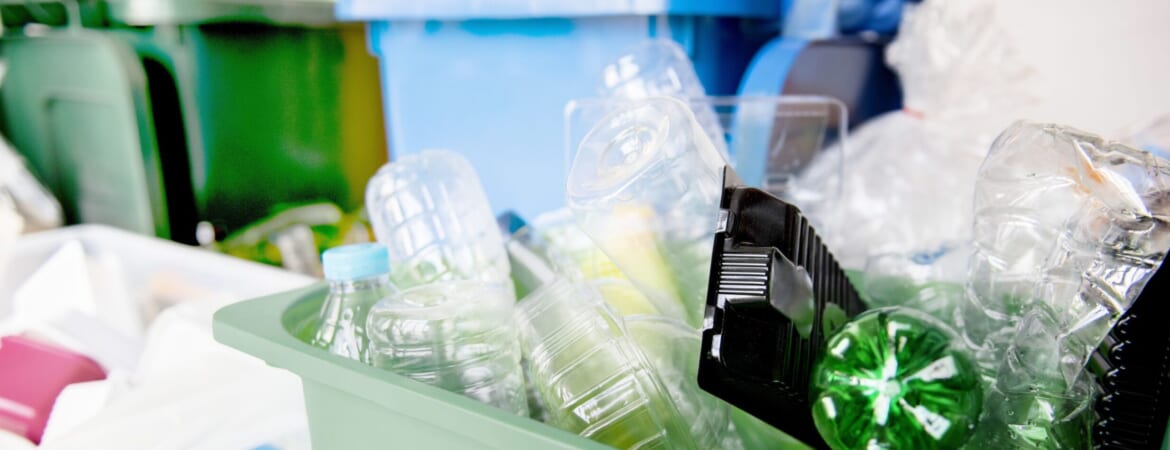
Global plastic production and consumption have witnessed a massive boom, with output reaching approximately 359 million tons in 2018,[1] and continuing to rise to 460 million tons in 2019.[2] However, this growth brings tremendous ecological consequences, as 5 to 13 million tons of plastic waste leak into the oceans annually.[3] Asia is currently the epicenter of this crisis, contributing to over 80% of global marine plastic leakage[4] and 8 out of the 10 most polluted rivers globally carrying plastic to the ocean are located in this region.[5] Clearly, transitioning to a circular plastics economy has become an urgent imperative to protect ecosystems and optimize resources. To reverse this trend and move toward a genuine circular plastics economy, the estimated global financial need could reach up to $1.64 trillion by 2040.[6] Although Asia is the focal point of the plastic waste crisis, the region has attracted only 8% (equivalent to $12 billion) of total global investments in plastic circularity, whereas North America and Europe account for 90% ($142 billion)[7] The reasons for this disparity likely stem from investment risks in developing countries, an unstable policy environment, a lack of mandatory regulations regarding the use of recycled plastics, and an over-reliance on the informal waste collection sector.
Recognizing this issue, the international community, including multilateral organizations, financial institutions, and non-governmental organizations (NGOs), has been deploying support to Southeast Asia. These efforts range from policy development and technical assistance to unlocking green capital flows and developing community initiatives.
2. The Reality of International Support for Plastics Circularity in Southeast Asia
Managing plastic waste requires synchronized interventions across multiple levels. In Southeast Asia, international organizations are deploying support through four main solution pathways, combining top-down approaches in policymaking with bottom-up implementation at the grassroots level.
a. Policy Development
In Southeast Asia, international cooperation serves as a lever for policy refinement. The World Bank (WB) provided $20 million in funding through the United Nations Office for Project Services (UNOPS) for the SEA-MaP project (spanning 5 years). This initiative focuses on helping the ASEAN bloc develop and harmonize waste management policies, aiming to reduce plastic consumption and prevent marine litter.[8]
At the national level, organizations like the UNDP are actively assisting governments in countries like Vietnam to complete legal frameworks and promote the Extended Producer Responsibility (EPR) mechanism.[9] EPR is a policy approach that holds manufacturers accountable for the entire lifecycle of their products, encompassing collection, sorting, recycling, or final disposal.[10] Furthermore, through international consulting, the WB has also provided recommendations to build domestic recycling markets. These include requirements to adopt "Design for Recycling" standards and proposing tax/fee instruments for packaging that fails to meet minimum recycled plastic ratios, drawing on successful lessons from Europe.[11]
Additionally, through the "Rethinking Plastics" project, GIZ supported Thailand's Pollution Control Department (PCD) in implementing a multi-stakeholder Memorandum of Understanding (MoU) to minimize single-use plastic waste from online food delivery applications.[12] The project piloted the "Less Plastics in Phuket" model on Thailand's largest island. Its goals were to reduce and better manage plastic waste among businesses and households, while exploring and testing alternatives to single-use plastics in the restaurant and food delivery sectors, thereby laying the groundwork for management policies at tourist destinations.[13]
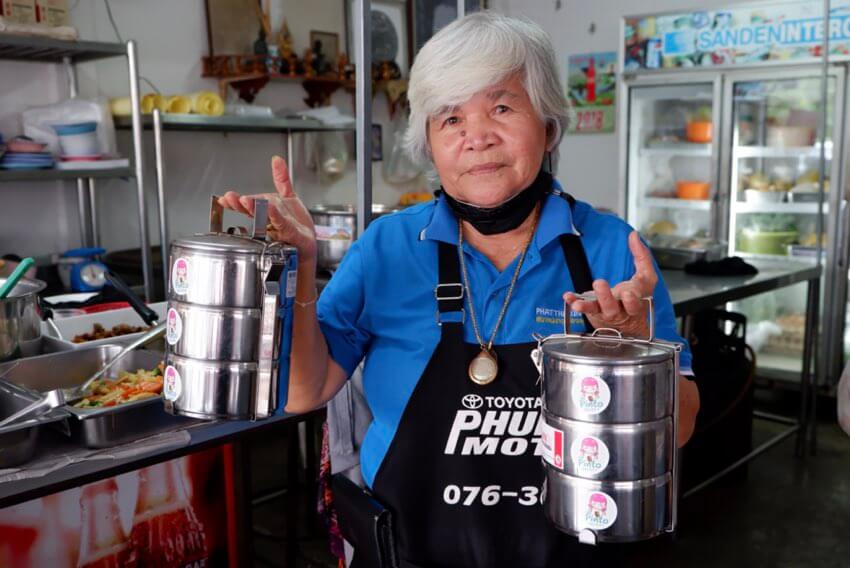
Note: Pintos are stainless steel, multi-tiered food containers that retain heat and keep food clean.
(Source: https://rethinkingplastics.eu/pilot-projects-en/95-less-plastics-in-phuket)
b. Capital Provision and Financial Solutions
To overcome capital bottlenecks and share risks with the private sector, international financial institutions have introduced various innovative financial instruments. In January 2024, the WB issued a 7-year, $100 million Plastic Waste Reduction-Linked Bond. This funding mitigates cash flow risks for developers by bridging the time gap between initial investment costs and future revenues from plastic and carbon credits.[14] In Southeast Asia, proceeds from this bond directly finance the SEArcular by Greencore project in Indonesia, which empowers coastal communities through the collection and recycling of hard-to-process plastics.[15] Similarly, the Asian Development Bank (ADB) provided a $44.2 million blue loan to PT ALBA Tridi Plastics Recycling Indonesia.[16] The loan aims to build an rPET plastic recycling plant with a capacity of 48,000 tons per year, accompanied by commitments to train and standardize the collection network.[17] In Vietnam, Vietnam Prosperity Joint Stock Commercial Bank (VPBank) launched a large-scale green finance program with a $212.5 million credit limit granted by the International Finance Corporation (IFC).[18] This includes a funding portfolio for eco-friendly products, technologies, and climate adaptation for a circular economy. At the corporate level, HSBC provided a $60 million green loan to assist Duy Tan Plastics Company in completing a food-grade bottle-to-bottle recycling plant. The facility is expected to reach a capacity of 100,000 tons per year, realizing international circularity standards in the domestic market.[19]
c. Technological Support and Private Sector Promotion
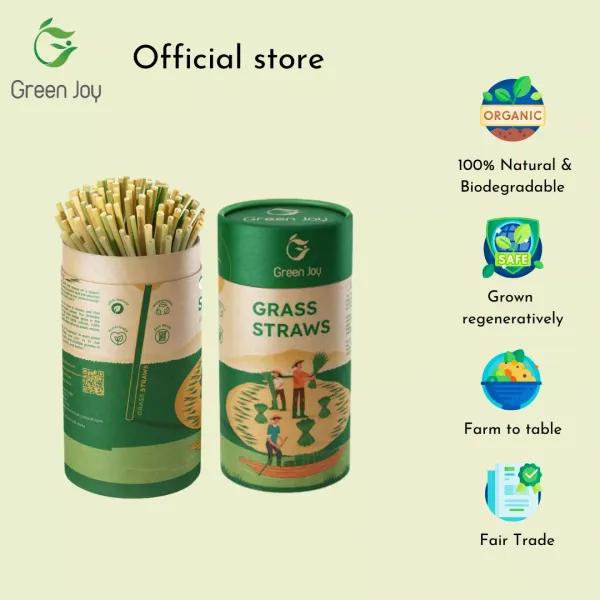
International aid funding plays a crucial role in attracting private sector participation and new technological solutions. The Ending Plastic Pollution Innovation Challenge (EPPIC), funded by UNDP and Norway over five years, attracted 350 solution proposals from 9 countries, helping to prevent and treat approximately 3,500 tons of plastic from entering the environment.[20] Providing seed funding of $18,000 per team enabled models like GreenJoy grass straws (Vietnam), CIRAC solvent-free recycling technology (Thailand), Siklus consumer product refill stations (Indonesia), and the TrashCash digital recycling platform (Philippines) to access an additional $700,000 from international impact investment funds.[21]
Source: https://greenjoystraw.com/ong-hut-co-bang-kho-green-joy-hop-tron-100-ong-p5.html?specification=6,11
The 4th ASEAN Regional Plastics Circular Economy Summit, held on May 29, 2025, in Ho Chi Minh City, gathered numerous international enterprises showcasing core processing technologies. Indorama Ventures Group (currently operating 23 facilities across 12 countries) is applying C-ZYME bio-recycling technology to break down PET at the molecular level, aiming to recycle 750,000 tons of PET by 2025.[22] In the realm of data management, the Japan International Cooperation Agency (JICA) funded the SDGs Business Verification Survey for "Pirika DX" technology in Vietnam during the 2023-2024 period.[23] This technology utilizes artificial intelligence to analyze images to map and visualize hotspots for littering, providing digital data that helps local governments track waste distribution and optimize collection resources.
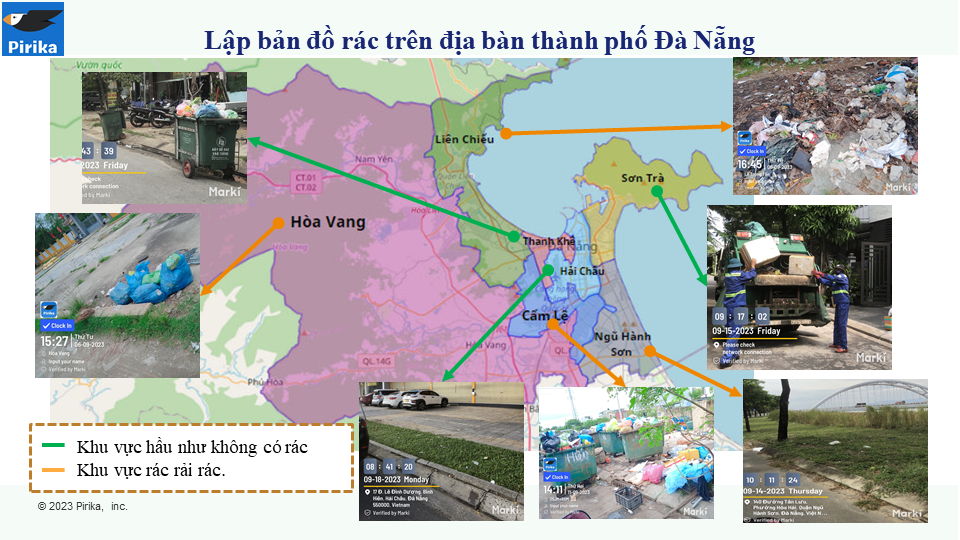
Source: https://osumi.vn/khao-sat-rac-tren-phan-mem-takanome-cua-pirika.html
d. Livelihood Improvement and Consumer Behavior Change
To protect the livelihoods of vulnerable worker groups, the CIRCLE Alliance (founded by Unilever, USAID, and EY) invested $21 million in India, Indonesia, Vietnam, and the Philippines, focusing on the economic empowerment of female waste pickers and supporting small and medium-sized enterprises (SMEs).[1] Concurrently, the UNDP, in coordination with The Coca-Cola Foundation, announced a $15 million grant package for 9 Asian countries to build recycling mechanisms alongside improved social security for the collection workforce.[2] This network is also being realized by domestic businesses like VietCycle. They have proactively collaborated with international partners (including WWF, the UNDP in the Plastic Reborn program, the Alliance to End Plastic Waste, and Dow Chemical) to establish a "circular ecosystem," connecting social security support for "green warrior" scrap collectors in Vietnam's urban areas.

Source: https://www.endplasticwaste.org/what-we-do/projects/vietcycle-plastic-cycle
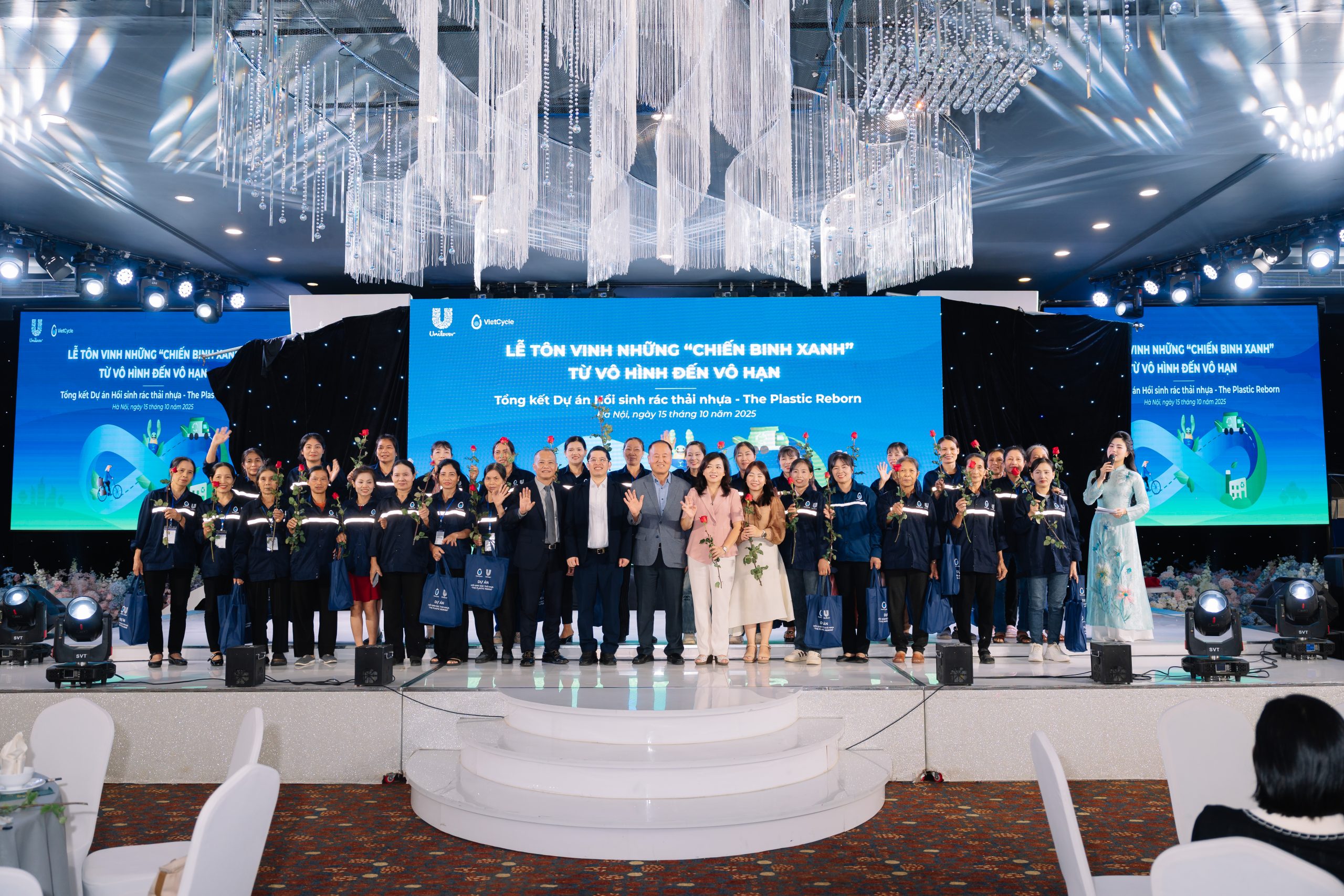
Source: https://vietcycle.vn/honoring-the-green-warriors-the-5-year-closing-ceremony-of-the-plastic-reborn-project/
On the consumer side, international projects have shifted from mere awareness education to designing alternative consumption models based on behavioral science to eliminate psychological barriers for users. Specifically, GIZ and the social enterprise ENVIU successfully commercialized a circular startup model in Malaysia called Tapauware. This is a system of high-quality, durable, and reusable plastic food containers integrated into the online food delivery chain with a deposit-return mechanism.[26] In Vietnam, JICA is a pioneer in efforts to change source separation habits, starting with the 3R-HN project in Hanoi from 2006 to 2009. Recently, JICA continued to fund the second phase of the solid waste separation and recycling project in Da Nang (2022-2025), aiming to establish a resource circulation system and reuse/recycle at least 15% of the city's total solid waste by 2025.[27]

3. Conclusion
Managing plastic waste in Southeast Asia cannot rely solely on isolated efforts. Through international companionship and support, countries in the region are steadily turning visions into practical actions. However, international resources only act as a catalyst; Southeast Asian nations themselves must be the primary agents in enacting strict laws, mandating recycling rates, making waste management data transparent, and building synchronized sorting and collection systems. The synergy among international support, government political commitments, and the private sector will help Southeast Asia close the plastics loop, protect the oceans, and create a sustainably developing future.
REFERENCE
[1] World Bank Group. (2021). Market Study for Vietnam: Plastics Circularity Opportunities and Barriers. The World Bank.
[2] Nguyễn Minh Khoa. (2023). Áp dụng kinh tế tuần hoàn trong ngành nhựa ở Việt Nam. Tạp chí Môi trường, (6). Truy cập tại https://ispae.vn/vn/tID12604_ap-dung-kinh-te-tuan-hoan-trong-nganh-nhua-o-viet-nam.html (truy cập ngày 17/6/2026)
[3] World Bank Group. (2021). Market Study for Vietnam: Plastics Circularity Opportunities and Barriers. The World Bank.
[4] World Bank Group. (2021). Market Study for Vietnam: Plastics Circularity Opportunities and Barriers. The World Bank.
[5] Baker, J., Sinogba, E. J., Aloysius, V., & Kerdlap, P. (2024). Financing Plastic Circularity in Asia and the Pacific: How to Overcome Market and Policy Challenges and Create Impact (ADB Brief No. 318). Asian Development Bank.
[6] Asiain, C., Acharya, A., & Wang, T. (2024). Money matters: Advancing Earth Day’s goals with a global plastics treaty. World Bank Blogs. Truy cập tại https://blogs.worldbank.org/en/climatechange/money-matters–advancing-earth-day-s-goals-with-a-global-plastic (truy cập ngày 18/6/2026)
[7] Baker, J., Sinogba, E. J., Aloysius, V., & Kerdlap, P. (2024). Financing Plastic Circularity in Asia and the Pacific: How to Overcome Market and Policy Challenges and Create Impact (ADB Brief No. 318). Asian Development Bank.
[8] Bình An (2022). World Bank tài trợ ASEAN 20 triệu USD chống ô nhiễm rác thải nhựa trên biển. Mekong ASEAN. Truy cập tại https://mekongasean.vn/world-bank-tai-tro-asean-20-trieu-usd-chong-o-nhiem-rac-thai-nhua-tren-bien-1776.html (truy cập ngày 19/6/2026)
[9] Thu Cúc (2025). 350 giải pháp chống ô nhiễm nhựa cho ASEAN. Báo Điện tử Chính phủ.
[10] Liu, X., & Zhou, Y. (2022). Rethinking Plastics – Circular Economy Solutions to Marine Litter. Deutsche Gesellschaft für Internationale Zusammenarbeit (GIZ) GmbH. Truy cập tại https://www.giz.de/en/downloads/giz-2022-en-rethinking-plastics-result%20brochure-china.pdf (truy cập ngày 19/6/2026)
[11] World Bank Group. (2021). Market Study for Vietnam: Plastics Circularity Opportunities and Barriers. The World Bank.
[12] GIZ. Rethinking Plastics – Circular Economy Solutions to Marine Litter – Thai-German Cooperation. Truy cập tại https://www.thai-german-cooperation.info/rethinking-plastics-circular-economy-solutions-to-marine-litter/ (truy cập ngày 19/6/2026)
[13] GIZ. Rethinking Plastics – Circular Economy Solutions to Marine Litter – Thai-German Cooperation. Truy cập tại https://www.thai-german-cooperation.info/rethinking-plastics-circular-economy-solutions-to-marine-litter/ (truy cập ngày 19/6/2026)
[14] World Bank. (2024). World Bank Plastic Waste Reduction-Linked Bond: Questions & answers. The World Bank.
[15] World Bank. (2024). World Bank Plastic Waste Reduction-Linked Bond: Questions & answers. The World Bank.
[16] Baker, J., Sinogba, E. J., Aloysius, V., & Kerdlap, P. (2024). Financing plastic circularity in Asia and the Pacific: How to overcome market and policy challenges and create impact (ADB Brief No. 318). Asian Development Bank.
[17] Baker, J., Sinogba, E. J., Aloysius, V., & Kerdlap, P. (2024). Financing Plastic Circularity in Asia and the Pacific: How to Overcome Market and Policy Challenges and Create Impact (ADB Brief No. 318). Asian Development Bank.
[18] World Bank Group (2021). Market study for Vietnam: Plastics circularity opportunities and barriers. The World Bank.
[19] World Bank Group (2021). Market study for Vietnam: Plastics circularity opportunities and barriers. The World Bank.
[20] Thu Cúc (2025). 350 giải pháp chống ô nhiễm nhựa cho ASEAN. Báo Điện tử Chính phủ.
[21] Thúy Ngân và nhóm PV, BTV (2025, Tháng 9 11). Hợp tác khu vực vì một ASEAN không rác thải nhựa. VietNamNet. Truy cập tại https://vietnamnet.vn/hop-tac-khu-vuc-vi-mot-asean-khong-rac-thai-nhua-2441918.html (truy cập từ 21/6/2026)
[22] Indorama Ventures Việt Nam (2025, Tháng 6 20). Hội nghị ASEAN: Indorama Ventures Việt Nam dẫn dắt nền kinh tế nhựa tuần hoàn. Truy cập tại https://indoramaventures.com.vn/hoi-nghi-asean-indorama-ventures-viet-nam-khang-dinh-vai-tro-tien-phong-trong-nhua-tuan-hoan/ (truy cập ngày 21/6/2026)
[23] Maeshima, K. (n.d.). JICA’s Initiative to tackle Plastic Pollution. Japan International Cooperation Agency (JICA).
[24] Unilever. (2024, Tháng 9 11). Dự án CIRCLE Alliance: mở rộng tính tuần hoàn của bao bì để giảm thiểu rác thải nhựa. Unilever Việt Nam. Truy cập tại https://www.unilever.com.vn/news/2024/du-an-circle-alliance-mo-rong-tinh-tuan-hoan-cua-bao-bi-e-giam-thieu-rac-thai-nhua/ (truy cập ngày 22/6/2024)
[25] UNDP. (2025). Chương trình Phát triển Liên Hợp Quốc (UNDP) và Quỹ Coca-Cola (TCCF) hợp tác để mở rộng quy mô quản lý chất thải nhựa trên khắp châu Á – bao gồm Việt Nam. United Nations Development Programme. Truy cập tại https://www.undp.org/vi/vietnam/press-releases/chuong-trinh-phat-trien-lien-hop-quoc-undp-va-quy-coca-cola-tccf-hop-tac-de-mo-rong-quy-mo-quan-ly-chat-thai-nhua-tren-khap (truy cập ngày 22/06/2026)
[26] GIZ. Collaborative action for single-use plastic prevention in Southeast Asia. Deutsche Gesellschaft für Internationale Zusammenarbeit (GIZ) GmbH. Truy cập tại https://www.giz.de/en/downloads/giz2022-en-plastic-prevention-in-southeast-asia.pdf (truy cập ngày 23/4/2026)
[27] VietnamPlus. (2022). JICA-funded project helps Da Nang enhance waste classification at source. VietnamPlus. Truy cập tại https://en.vietnamplus.vn/jica-funded-project-helps-da-nang-enhance-waste-classification-at-source-post234799.vnp (truy cập ngày 23/4/2026)
Leave A Comment