logo
  • TRANG CHỦ
  • GIỚI THIỆU
  • THƯ VIỆN ẢNH
  • TIN TỨC
  • FAQ
  • LIÊN HỆ
logo
  • Tháng 4 23, 2026
  • 0 Comments
  • By SETY CAMP

GIỚI TRẺ ĐÔNG NAM Á VÀ XU HƯỚNG TIÊU DÙNG BỀN VỮNG TRONG KỶ NGUYÊN SỐ

  1. Đặt vấn đề

Sinh ra và trưởng thành trong kỷ nguyên dữ liệu, giới trẻ Đông Nam Á không chỉ thụ động tiếp nhận các xu hướng toàn cầu mà đang trực tiếp định hình lại định nghĩa về tiêu dùng bền vững. Tuy nhiên, sự giao thoa giữa một kinh tế số bùng nổ, các nền tảng thương mại điện tử lan rộng và áp lực biến đổi khí hậu ngày càng hiện hữu không vận động theo một đồ thị tuyến tính đi lên. Thay vào đó, bối cảnh hiện tại khiến chúng ta phải đặt ra câu hỏi không chỉ là liệu thế hệ trẻ có quan tâm đến tiêu dùng bền vững hay không, mà là: liệu nhận thức đó có thực sự chuyển hóa thành hành động? Tương lai của tiêu dùng bền vững tại khu vực phụ thuộc phần lớn vào việc liệu công nghệ số có được định hướng để phục vụ mục tiêu kiến tạo sinh thái, hay tiếp tục dung dưỡng chủ nghĩa tiêu dùng ngắn hạn.

2. Xu hướng tiêu dùng bền vững của giới trẻ Đông Nam Á
Đối với giới trẻ, tính bền vững đã trở thành một trong những tiêu chí hàng đầu chi phối quyết định mua sắm, được thúc đẩy bởi nhận thức rằng biến đổi khí hậu mới là mối đe dọa toàn cầu lớn nhất đối với tương lai của họ, vượt qua cả
những lo ngại về lạm phát hay bất ổn tài chính.[1] Tại Việt Nam, 73% người tiêu dùng, đặc biệt là thế hệ Z và Millennials, bày tỏ quan tâm sâu sắc đến các vấn đề môi trường và đề cao trách nhiệm cá nhân trong việc bảo vệ hệ sinh thái.[2] Đồng thời, gen Z cũng đại diện cho một thế hệ tiêu dùng chi tiêu nhiều hơn nhưng đồng thời chọn lọc hơn khi ưu tiên trải nghiệm có giá trị và minh bạch về nguồn gốc.[3]

    2.1. Mô hình tiêu dùng số sáng tạo
    Kỷ nguyên số không chỉ thay đổi cách người trẻ nghĩ về sản phẩm mà còn cung cấp cho họ những công cụ hữu hiệu để có thể tiêu dùng bền vững một cách thuận tiện nhất, công nghệ đang xóa bỏ dần các rào cản về sự bất tiện và chi phí. Tại Thái Lan, Singapore và Hồng Kông, ứng dụng Yindii đang dẫn đầu cuộc chiến chống lãng phí thực phẩm. Thay vì để những phần ăn từ các nhà hàng, tiệm bánh bị vứt bỏ vào cuối ngày, Yindii kết nối trực tiếp chúng với người tiêu dùng trẻ thông qua nền tảng số với mức giá giảm sâu.[4] Cũng có thể kể đến ứng dụng Carousell giúp đơn giản hóa trải nghiệm mua bán đồ cũ. Thông qua vài cú chạm, người dùng có thể kéo dài tuổi thọ của hàng triệu món đồ, từ quần áo đến thiết bị điện tử, định hình lại văn hóa “secondhand”.[5]

    Tác động của Yindii trong 2025 đã giúp người dùng Hồng Kông tiết kiệm hơn 10 triệu đô la Hồng Kông và ngăn chặn thực phẩm dư thừa bị vứt vào bãi rác
    Nguồn ảnh: https://vietnamnews.vn/media-outreach/1732503/yindii-turns-food-waste-into-value-saving-500-000-meals-in-2025.html

    2.2. Hành động kiến tạo của thanh niên và khởi nghiệp xanh

    Không dừng lại ở việc tận dụng các nền tảng có sẵn để mua sắm thông minh hơn, giới trẻ Đông Nam Á không chỉ chờ đợi các giải pháp từ chính phủ hay doanh nghiệp lớn mà tự mình trở thành những người kiến tạo. Những startup do giới trẻ dẫn dắt đang định hình lại các ngành công nghiệp từ thời trang đến nông nghiệp thông qua các mô hình kinh doanh đổi mới sáng tạo. Giới trẻ Đông Nam Á đã từ chối vai trò tiêu dùng thụ động và chuyển sang vai trò kiến tạo chủ động. Trong đó, có thể kể đến chuỗi dự án do thanh niên lãnh đạo trong Mạng lưới Global Shapers tập trung vào nâng cao năng lực công nghệ và kiến thức về kỹ thuật số, ưu tiên triển khai các giải pháp thực tiễn về năng lượng tái tạo, phát triển bền vững. Triết lý cốt lõi của mạng lưới dựa trên niềm tin rằng sự thay đổi thực chất không thể chỉ diễn ra từ trên xuống (top-down), mà phải được thúc đẩy từ dưới lên (bottom-up) thông qua các hành động cụ thể tại cấp độ thành phố, trao quyền cho người trẻ. Trong giai đoạn 2024-2025, cộng đồng đã thực hiện hơn 800 dự án, trực tiếp hỗ trợ 134.000 cá nhân và tiếp cận hơn 2,2 triệu người thông qua các nền tảng số và chiến dịch cộng đồng.[6]

    Thí nghiệm “Nếm thử không thiên vị” thuộc sáng kiến của Mạng lưới Global Shapers Bangkok nhằm thúc đẩy thói quen tiêu thụ thức ăn bền vững và có ý thức hơn bằng cách giải quyết những định kiến ​​thường định hình nhận thức của người tiêu dùng.
    Nguồn ảnh: https://www.globalshapersbangkok.org/projects/plant-planet

    Tại Việt Nam, làn sóng khởi nghiệp tạo tác động xã hội đang nở rộ, được nuôi dưỡng bởi các mạng lưới hỗ trợ quốc tế như chương trình ươm tạo Youth Co:Lab (do UNDP và Citi Foundation đồng sáng lập). Ngoài ra, một số mô hình khởi nghiệp tiêu biểu có thể kể đến như HUBTECH ASIA, một nền tảng quản trị và kết nối nông nghiệp toàn diện hay nền tảng REshare hỗ trợ thu gom và xử lý quần áo cũ nhằm kéo dài vòng đời sản phẩm, góp phần giảm thiểu rác thải thời trang[7]; ứng dụng WINDOU kết nối người dùng với các điểm tái chế và ứng dụng AI để tính toán lượng carbon có thể giảm thiểu thông qua hành động cụ thể.[8]
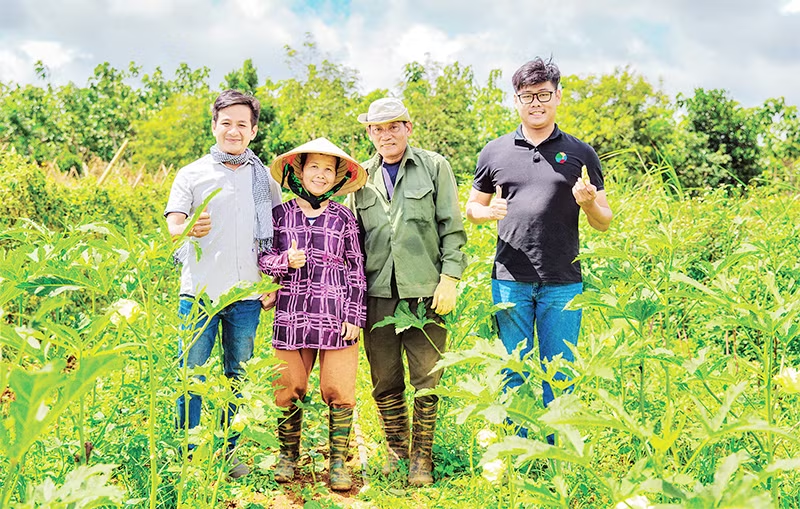
    Để ứng dụng của HubTech hoạt động hiệu quả với nhà nông, Founder Nguyễn Thiên Lý (áo đen) thường xuyên có các chuyến đi thực địa
    Nguồn ảnh: https://nhandan.vn/nuoi-hoai-bao-de-duoc-la-chinh-minh-post793188.html

    Đặc biệt trong lĩnh vực dệt may, một trong những ngành gây ô nhiễm nhất toàn cầu. Các thương hiệu thời trang lớn trên toàn cầu (như Ralph Lauren, Cotopaxi) đang ứng dụng blockchain và AI (như phần mềm Materia MX) để tái cấu trúc vòng đời sản phẩm.[9] Dựa trên ý tưởng đó, các mô hình khởi nghiệp tại Việt Nam cũng áp dụng trí tuệ nhân tạo để tối ưu hóa quy trình cắt may vải thừa hay giải quyết rác thải như một số mô hình DELIGENT (thiết kế áo thun, tối ưu quy trình bằng AI) hay SENONIKA (thiết kế bằng AI và in 3D từ rác tái chế).[10] Nhìn sang Philippines, Panublix nổi lên với ý tưởng kết nối tính bền vững của sinh thái với sự công bằng kinh tế xã hội. Panublix là một startup sử dụng các loại sợi tự nhiên từ dứa và chuối để tạo ra các loại vải bền vững, đồng thời xây dựng một nền tảng kỹ thuật số để kết nối các nghệ nhân dệt may vùng nông thôn với thị trường thời trang toàn cầu.[11] Bằng cách này, Panublix đã giải quyết cùng lúc các vấn đề từ giảm rác thải nông nghiệp, cung cấp nguyên liệu xanh cho ngành dệt may, và bảo vệ sinh kế cho cộng đồng yếu thế.

    3. Chính sách vĩ mô và giáo dục nâng cao năng lực

      Nhận thức rõ vai trò hạt nhân của thanh niên, Kế hoạch công tác ASEAN về Thanh niên giai đoạn 2021-2025 đặt trọng tâm chiến lược vào phát triển các hệ thống giáo dục thân thiện với đổi mới sáng tạo, thúc đẩy thanh niên tham gia trực tiếp vào các quy trình ra quyết định chính sách cấp cao. Bám sát SDG 12 trong Chương trình Nghị sự 2030 của Liên Hợp Quốc, giới trẻ được định vị không phải là đối tượng chính sách mà là chủ thể chuyển đổi.[12] Trên thực tiễn, Không gian Giáo dục Đại học ASEAN hướng tới số hóa nền giáo dục, tạo điều kiện luân chuyển sinh viên và trang bị các bộ kỹ năng chuyển đổi xanh cần thiết để thích ứng với biến đổi khí hậu.[13] Nền tảng EcoRise tại Đông Nam Á đang tích hợp giáo dục khí hậu vào chương trình phổ thông và đại học, đặt nền tảng học thuật cho các thế hệ hành động về sau.[14] Đồng hành cùng xu hướng đó, dự án SETY Camp do Viện Chính sách, Đổi mới và Khoa học Liên ngành (IPIIS) tổ chức, dưới sự tài trợ từ Quỹ Rosa Luxemburg khu vực Đông Nam Á (RLS SEA), đóng vai trò thiết thực trong việc hướng tới mục tiêu nâng cao năng lực nghiên cứu về chuyển đổi sinh thái – xã hội, phát triển cộng đồng và  tư duy bền vững cho thanh niên.

      4. Kết luận
      Nhìn chung, giới trẻ Đông Nam Á sở hữu khả năng làm chủ công nghệ, nhạy bén với dữ liệu và có nhận thức về khủng hoảng tài nguyên, biến đổi khí hậu; thế hệ này đang từng ngày mở rộng giới hạn của nền kinh tế tiêu dùng theo hướng có trách nhiệm hơn. Tuy nhiên, tiềm năng đó chỉ có thể được hiện thực hóa khi đáp ứng đồng thời: hệ thống chính sách tạo môi trường thể chế thuận lợi; nền giáo dục trang bị năng lực tư duy hệ thống và kỹ năng xanh; và quan trọng hơn cả, nền tảng số được định hướng phục vụ mục tiêu kiến tạo sinh thái thay vì tiếp tục khuếch đại chủ nghĩa tiêu dùng ngắn hạn. Nền kinh tế số của ASEAN chỉ có thể phát triển thịnh vượng và lâu dài khi sự tiện lợi của công nghệ đi đôi với việc gìn giữ nhịp đập tự nhiên của trái đất.

        [1] NielsenIQ. (2025, November 4). Southeast Asia’s consumers are redefining value amidst headwinds, powering a $5 trillion consumption future by 2035. NIQ.
        [2] Tran, M. (2024). To target younger consumers, brands need to do more for the environment. Vietcetera.
        [3] NielsenIQ. (2025, November 4). Southeast Asia’s consumers are redefining value amidst headwinds, powering a $5 trillion consumption future by 2035. NIQ.
        [4] Vietnam News. (2025). Yindii turns food waste into value, saving 500,000+ meals in 2025. Truy cập từ https://vietnamnews.vn/media-outreach/1732503/yindii-turns-food-waste-into-value-saving-500-000-meals-in-2025.html (ngày truy cập 18/04/2026)
        [5] Affifa. (2024). E-commerce Odyssey in Southeast Asia: Exploring Trends and Triumphs. Cube Asia.
        [6] World Economic Forum. (2025). Global Shapers Community Annual Report 2024-2025.
        [7] Nguyễn Hà (2024). Nuôi hoài bão để được là chính mình. Báo Nhân Dân Điện Tử.
        [8] Khánh Linh (2024). 10 student startups at Startup Wheel 2024. Startup Wheel.
        [9] Gazzola, P., Pavione, E., Hillebrand, R., Vota, V., & Rosa, R. (2025). The circular economy and the role of technology in the fashion industry: A comparison of empirical evidence. Sustainability, 17(7), 3104. https://doi.org/10.3390/su17073104
        [10] Khánh Linh (2024). 10 student startups at Startup Wheel 2024. Startup Wheel.
        [11] World Intellectual Property Organization. (2022). Well-knit: building a stable platform for sustainable fashion in Southeast Asia. WIPO.
        [12] The ASEAN Secretariat. (2022). ASEAN work plan on youth 2021-2025. The ASEAN Secretariat, Jakarta.
        [13] ASEAN. (2022). Roadmap on the ASEAN higher education space 2025.
        [14] INTI International University. (n.d.). EcoRise Southeast Asia 2025. https://newinti.edu.my/esg/index.php/home-ecorise-copy/
        English below:

        Southeast Asian Youth and Sustainable Consumption Trends in the Digital Era

        1.Introduction

        Born and raised in the era of data, young people across Southeast Asia are not merely passive recipients of global trends; they are actively redefining what sustainable consumption means. Yet the intersection of a rapidly expanding digital economy, proliferating e-commerce platforms, and intensifying climate pressures does not follow a simple upward trajectory. This complex landscape compels us to move beyond asking whether younger generations care about sustainable consumption and to confront a more fundamental question: does environmental awareness actually translate into behavioral change? The future of sustainable consumption in the region hinges largely on whether digital technologies are purposefully directed toward ecological value creation or whether they continue to entrench short-term consumerism.

        2. Sustainable Consumption Trends Among Southeast Asian Youth

        Among young demographics, sustainability has emerged as a primary determinant in purchasing behavior, driven by the consensus that climate change poses the most profound global threat to their future superseding concerns over inflation or financial volatility. In Vietnam, 73% of consumers, particularly Generation Z and Millennials, exhibit deep concern for environmental integrity, increasingly emphasizing personal accountability in ecological preservation.

        2.1 Innovative Digital Consumption Models

        The digital era has not only transformed how young people conceptualize products but has also equipped them with effective tools to adopt sustainable behaviours with unprecedented ease. Technology is progressively dismantling the barriers of inconvenience and cost that once impeded more responsible consumption. In Thailand, Singapore, and Hong Kong, the Yindii application is at the forefront of the fight against food waste. Rather than allowing surplus meals from restaurants and bakeries to be discarded at the end of each day, Yindii directly connects these offerings to young consumers via a digital platform at significantly reduced prices. Alongside such initiatives, the platform Carousell has substantially simplified the second-hand marketplace experience. Through a few taps, users can extend the lifespan of millions of items from clothing to electronics, actively reshaping the cultural perception of pre-owned goods.

        Yindii’s 2025 impact: users in Hong Kong saved more than HKD 10 million and prevented surplus food from reaching the landfill.
        Image source: https://vietnamnews.vn/media-outreach/1732503/yindii-turns-food-waste-into-value-saving-500-000-meals-in-2025.html

        2.2 Youth-Led Action and Green Entrepreneurship

        What distinguishes Southeast Asian youth is not merely their capacity to leverage existing platforms for smarter purchasing decisions, but their refusal to wait for solutions from governments or large corporations. Increasingly, young people are positioning themselves as architects of change. Youth-led startups are reshaping industries from fashion to agriculture through innovative and impact-driven business models, marking a decisive shift from passive consumption to active co-creation. Notable among these are the youth-led initiatives within the Global Shapers Community, which focus on enhancing technological capacity and digital literacy, with a priority on implementing practical solutions for renewable energy and sustainable development. The core philosophy of this network is rooted in the belief that substantive change cannot occur solely top-down; it must be catalysed through bottom-up action at the city level, with young people as empowered agents. Between 2024 and 2025, the network implemented more than 800 projects, directly supported 134,000 individuals, and reached over 2.2 million people through digital platforms and community campaigns.

        The “Blind Tasting” experiment, an initiative of the Global Shapers Bangkok Hub promotes more sustainable and mindful food consumption by challenging the preconceptions that typically shape consumer behavior.
        Image source: https://www.globalshapersbangkok.org/projects/plant-planet

        In Vietnam, a flourishing wave of social impact startups is being nurtured by international support networks, most notably the Youth Co:Lab incubation program, co-founded by UNDP and the Citi Foundation. Among the emerging models, HUBTECH ASIA offers a comprehensive agricultural management and connectivity platform; REshare facilitates the collection and processing of used clothing to extend product lifecycles and reduce fashion waste; and WINDOU connects users with recycling points while employing AI to calculate the carbon reductions achievable through specific individual actions.

        To ensure HubTech’s application functions effectively for farmers, Founder Nguyễn Thiên Lý (in black) conducts regular field visits.
        Image source: https://nhandan.vn/nuoi-hoai-bao-de-duoc-la-chinh-minh-post793188.html

        The textile and garment sector among the most polluting industries globally offers particularly instructive examples of this innovation dynamic. Major international fashion brands such as Ralph Lauren and Cotopaxi are deploying blockchain and AI-powered tools (including software such as Materia MX) to restructure product lifecycles.Inspired by these concepts, Vietnamese startups are also applying artificial intelligence to optimise cutting processes and minimise fabric waste. Examples include DELIGENT, which uses AI to streamline T-shirt design and production workflows, and SENONIKA, which employs AI-driven design and 3D printing using recycled waste materials.
        In the Philippines, Panublix has emerged as a compelling model integrating ecological sustainability with socio-economic equity. The startup uses natural fibres derived from pineapple and banana plants to produce sustainable textiles, while developing a digital platform to connect rural artisan weavers with global fashion markets. In doing so, Panublix simultaneously addresses agricultural waste reduction, the supply of sustainable raw materials for the textile sector, and the protection of livelihoods within vulnerable communities.

        3. Macro-policy and Capacity-Building Education

        While the behavioral shift among the youth is a positive indicator, transforming this trend into a sustainable eco-social transition for society as a whole requires a supportive ecosystem spanning policy, education, and technical infrastructure.
        Recognising the central role of young people, the ASEAN Work Plan on Youth 2021–2025 places strategic emphasis on developing innovation-friendly education systems and enabling youth to participate directly in high-level policy decision-making processes. In alignment with SDG 12 of the United Nations 2030 Agenda for Sustainable Development, young people are positioned not merely as subjects of policy, but as the principal agents of transition.
        In practice, the ASEAN Higher Education Space is advancing the digital transformation of education, facilitating student mobility across the region, and equipping graduates with the green transition competencies required to navigate climate change. In parallel, the EcoRise platform in Southeast Asia is integrating climate education into secondary and tertiary curricula, establishing an academic foundation from which future generations of sustainability-oriented actors can emerge. Contributing to this momentum, the SETY Camp project organised by the Institute of Policy Innovation and Interdisciplinary Sciences (IPIIS) and supported by the Rosa Luxemburg Stiftung Southeast Asia (RLS SEA) plays a concrete role in strengthening young people’s research capacity in eco-social transition, community development, and systems-oriented sustainability thinking.

        4. Conclusion

        Southeast Asian youth demonstrate a distinctive combination of technological fluency, data literacy, and awareness of resource scarcity and climate change; this generation is continuously expanding the boundaries of the consumer economy toward greater responsibility. Yet this potential can only be fully realised through the simultaneous fulfilment of three enabling conditions: policy frameworks that establish conducive institutional environments; education systems that cultivate systems thinking and green competencies; and, most critically, digital platforms that are deliberately oriented toward ecological value creation rather than the amplification of short-term consumerism. ASEAN’s digital economy can only achieve genuine and lasting prosperity when the convenience offered by technology is aligned with the preservation of the planet’s natural rhythms.

        SETY CAMP

        • Share:

        Leave A Comment Cancel reply

        Awesome Logo

        Về chúng tôi

        SETY Camp là trại hè khoa học dành cho học viên từ 15-35 tuổi do Viện Chính sách và Quản lý tổ chức, dưới sự tài trợ của Quỹ Rosa-Luxemburg khu vực Đông Nam Á.

        Menu

        • TRANG CHỦ
        • GIỚI THIỆU
        • THƯ VIỆN ẢNH
        • TIN TỨC
        • FAQ
        • LIÊN HỆ

        Liên hệ

        • Tầng 7 nhà M, Trường Đại học Khoa học Xã hội và Nhân văn, số 336, Nguyễn Trãi, Thanh Xuân, Hà Nội
        • setycamp2022@gmail.com
        • (+84) 243-558-7547
        Awesome Image

        © SETY camp. All Rights Reserved 2022

        Login

        Forgot Password?

        Thêm/sửa đường dẫn

        Nhập địa chỉ đích

        Hoặc liên kết đến nội dung đã tồn tại

          Thiếu từ khóa tìm kiếm. Hiển thị các bài viết mới nhất. Tìm hoặc sử dụng phím mũi tên lên và xuống để chọn một mục.