APPLICATION OF BLUE-GREEN INFRASTRUCTURE (BGI) IN GREEN URBAN DEVELOPMENT ORIENTATION IN VIETNAM
- Introduction
Southeast Asia is one of the most vulnerable regions to climate change due to its unique geography, high population density, and heavy economic reliance on coastal areas. Densely populated cities with large concrete surfaces are dealing with a host of environmental issues. Among these, flooding, environmental degradation, and massive pressure on drainage systems are the most severe. When it comes to traditional "grey" infrastructure (like underground sewer networks and concrete dikes), their drainage capacity is clearly showing its limits. This failure causes heavy damage to the economy, public health, and the social life of urban residents [1]. Therefore, a new approach is gaining widespread attention: Blue-Green Infrastructure (BGI). Simply put, this involves creating and developing infrastructure spaces that blend green areas (such as parks, gardens, and green corridors) with blue elements (like ponds, lakes, rivers, and streams) and seamlessly integrating them into urban planning and design. In practical urban management, BGI is viewed as an effective solution to support green city development. It provides an approach that is much more flexible, carries fewer risks, and is better equipped to handle extreme climate conditions [2].
2. Global applications of Blue-Green Infrastructure (BGI)
Rather than operating through a singular mechanism, BGI functions as an integrated network that amalgamates various spatial elements; furthermore, unlike traditional grey infrastructure which merely expedites water disposal, BGI inherently leverages natural hydrological processes to mitigate surface runoff and alleviate urban infrastructural strain. One widely mentioned framework is Sustainable Drainage Systems (SuDS). This includes green roofs, permeable surfaces, green drainage channels, rain gardens, rainwater storage tanks, and artificial wetlands. The common goal of these components is to manage rainwater right at its source. They mimic natural hydrological processes like infiltration, evaporation, and storage. This reduces surface runoff and helps improve urban water quality [3].
In practice, BGI does not exist as a single model but is implemented through various specific solutions depending on the climatic conditions, topography, and level of development of each city [4]. One of the most frequently referenced frameworks is the Sustainable Drainage System (SuDS), which includes green roofs, permeable surfaces, vegetated swales, rain gardens, rainwater harvesting tanks, and constructed wetlands [5]. A common characteristic of these components is their shared objective of managing stormwater at its source, while simulating natural hydrological processes such as infiltration, evaporation, and water retention. Through these mechanisms, they help reduce surface runoff and contribute to improving urban water quality.
Among the SuDS components, bioretention systems are considered one of the highly efficient hydrological solutions. This system can reduce peak flood levels by up to 65-80%. When combining bioretention with green roofs in hybrid systems, the runoff reduction capacity can increase significantly during heavy rain [6]. Green roofs are especially suitable for high-density cities where land is limited. Besides retaining a portion of rainwater, green roofs help reduce the heat load on buildings. They also create additional ecological space in the built environment. In Singapore, green roofs are reported to save 20% of a building's cooling load. This creates co-benefits for both the economy and carbon emissions [7]. In Japan, integrating green roofs into long-term urban planning strategies is well demonstrated in Fukuoka. The ecological building in Fukuoka City is recognized as one of the most famous green roof projects in the world [8].
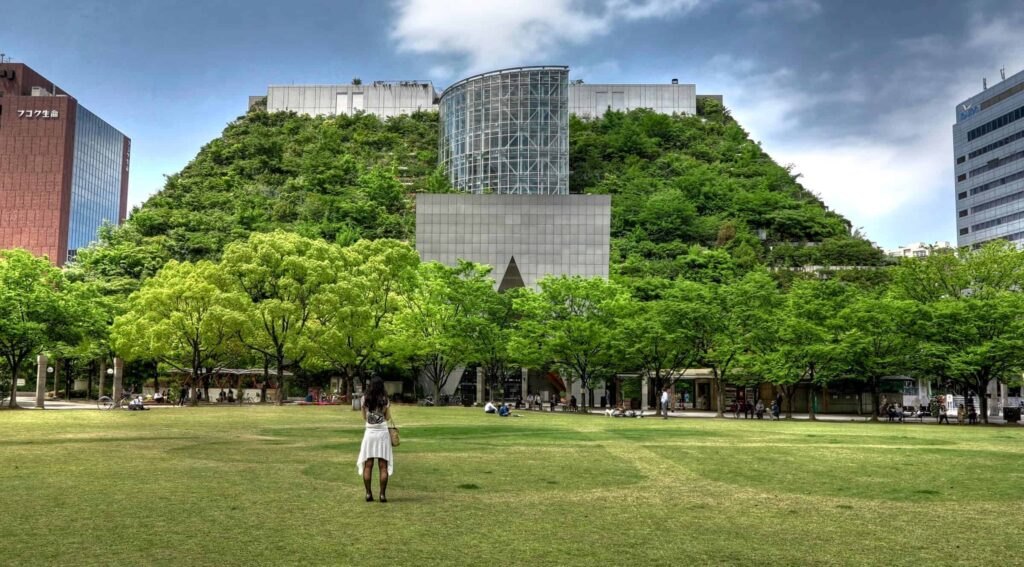
(Source: https://inarquia.es/edificio/edificio-acros-fukuoka-unico-espacio-verde-ciudad-japonesa/ )
At the same time, many cities around the world have also successfully integrated SuDS components into their existing infrastructure. In Singapore, the ABC Waters Programme has turned several drainage structures into urban spaces with ecological and community value. One example is Bishan-Ang Mo Kio Park. Here, the riverbed expands naturally during the rainy season to hold excess water. At the same time, it creates additional landscapes and public living spaces.
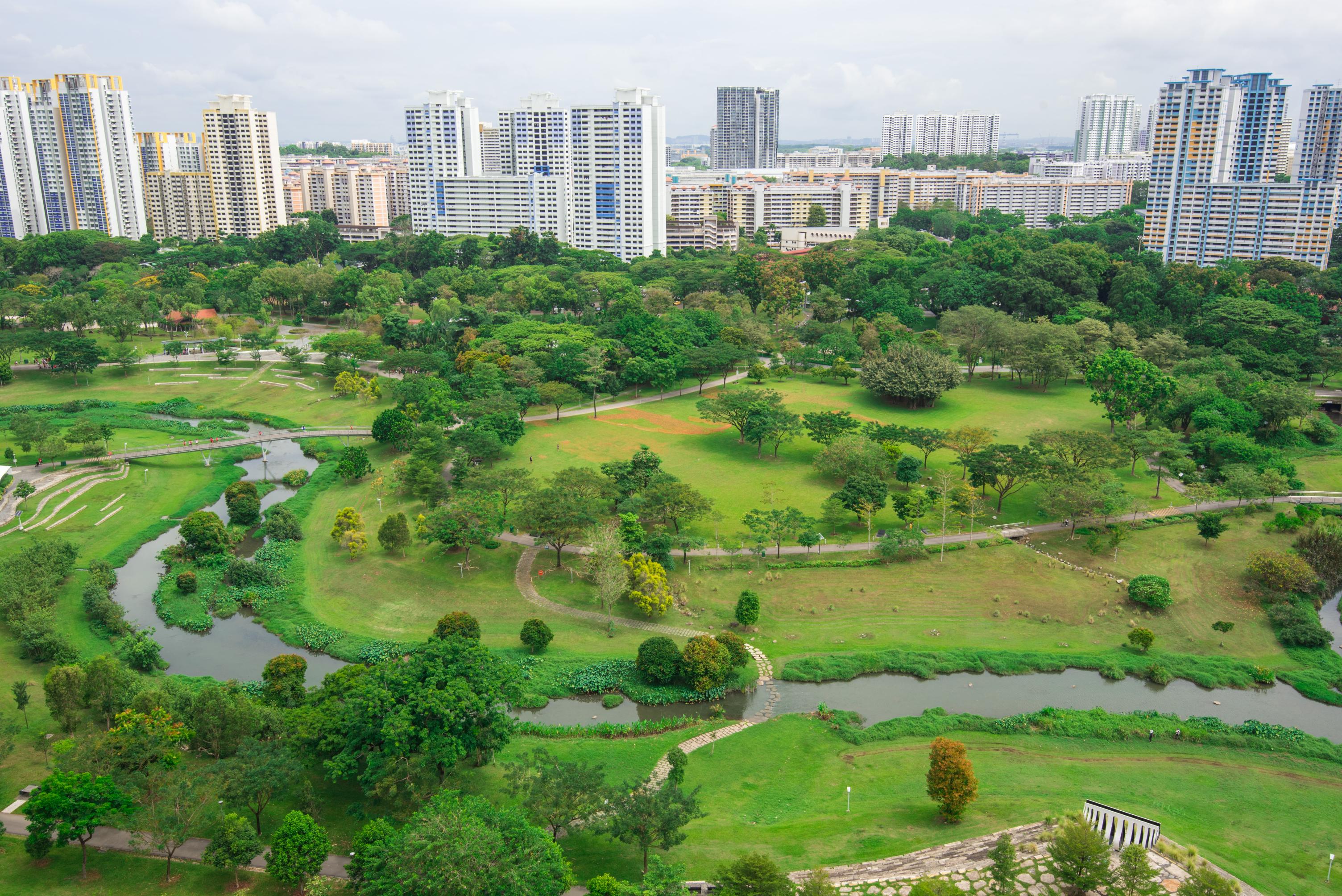
(Source: https://www.siww.com.sg/home/programme/technical-site-visits/bishan-ang-mo-kio-park )
In Rotterdam, water squares serve as public spaces during the dry season. However, they become temporary storage basins when heavy rain occurs.
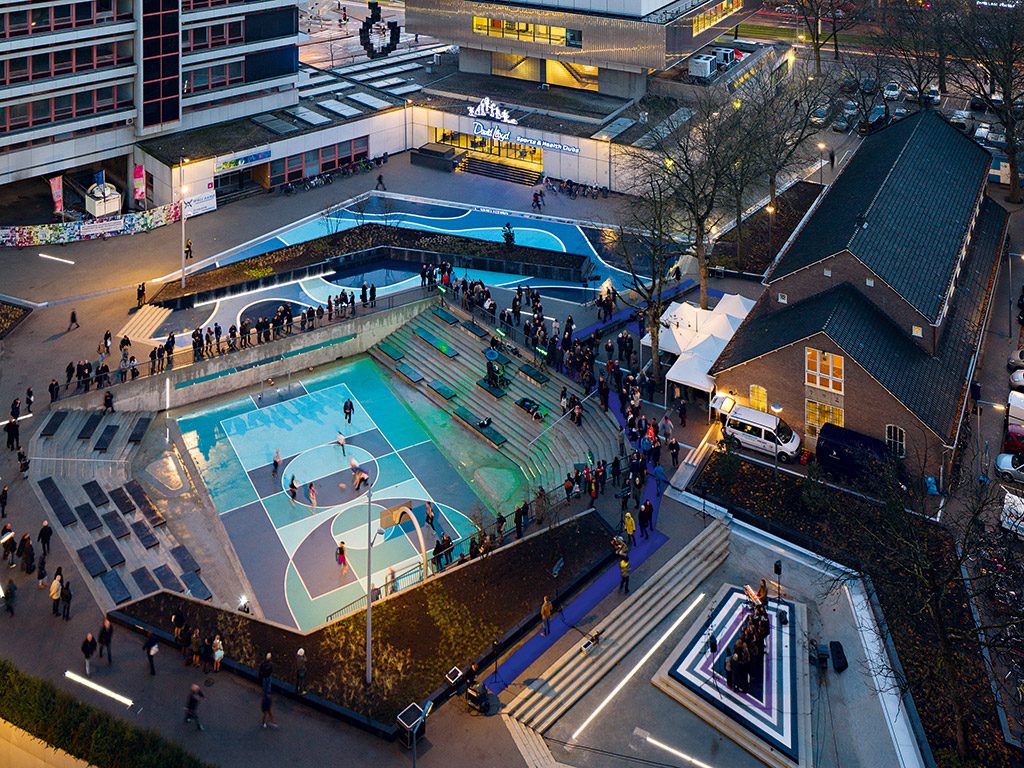
(Source: https://naturesacred.org/future-of-blue-spaces/ )
Similarly, in Copenhagen, Denmark implemented the Cloudburst Management Plan after a catastrophic flood in 2011. The plan aims to manage surface water and respond flexibly to extreme rain events. Under this plan, streets are designed to act as natural water corridors during heavy rain. At the same time, parks and squares are renovated into low-lying areas. These areas store and absorb huge amounts of water to minimize localized flooding.


(Source: https://constructionnews.ie/copenhagen-cloudburst-plan/ )
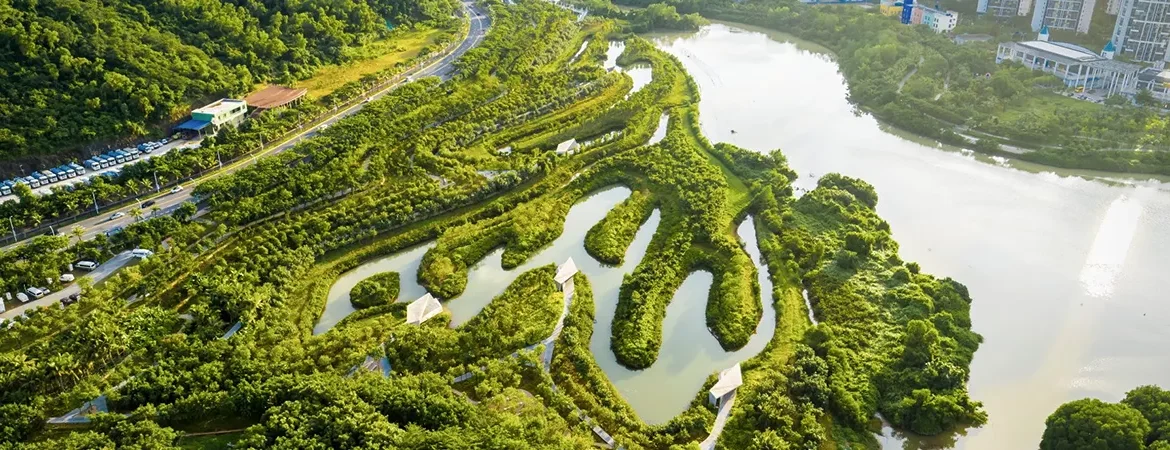
In addition, within the BGI solution group, the "sponge city" model is often mentioned as a more natural way of thinking about rainwater management. This model manages rainwater by designing drainage systems combined with green spaces. This allows the city to absorb and store water just like a sponge. As a result, it increases the city's resilience against both floods and droughts [9]. The "Sponge City" concept inherits principles from Water Sensitive Urban Design (WSUD) in Australia and Sustainable Drainage Systems (SuDS) in the UK [10]. A practical example of this model is the drainage strategy in Ningbo City, China. Ningbo faced pressure from converting agricultural land into high-density industrial zones, which reduced permeable surfaces. To address this, the city applied the Sponge City design on a city-wide scale. This helps reduce pressure on drainage pipes, restore the urban water ecosystem, conserve groundwater, and mitigate the urban heat island effect [11].

Caption: From left to right: (1) Retaining water at the source thanks to the mountainous terrain upstream; (2) Slowing down the flow through a system of meandering rivers and ponds in the midstream; and (3) Adapting safely in urban downstream areas using green architectural solutions, helping the city absorb water like a giant "sponge".
(Source: https://www.architecturalrecord.com/articles/17039-newsmaker-kongjian-yu-says-landscape-is-a-matter-of-survival )
3. BGI application orientation for green urban development in Vietnam
In Vietnam, the urban development orientation for the coming years clearly shows the trend of greening, smart city development, and increasing climate adaptation. According to the Ministry of Construction's orientation to 2045, Vietnam aims to develop at least 5 international-class cities. At the same time, the urban system must be "flexible, balanced, and sensitive to climate change, natural disasters, and diseases," with green and smart elements being increasingly emphasized. The indicators for urban green space areas are also quite clearly stated. Specifically, the target is 6-8 m²/person by 2025 and 8-10 m²/person by 2030 [12].
However, Vietnam's challenge lies not only in expanding on an urban scale but also in the ability to adapt to flooding, saltwater intrusion, storms, and extreme rain. Cities like Hue, Da Nang, Quy Nhon, and Can Tho are all facing significant environmental pressure due to geographical characteristics and the speed of urban development. For example, in Quy Nhon, raising roads and houses accidentally blocked natural drainage channels. This has led to worse flooding in nearby low-lying areas [13]. In that context, BGI is a suitable suggestion because it allows the integration of flood control goals into urban spatial planning.
Vietnam is step by step approaching policies and practices related to green cities, resilient cities, and urban water management. A typical example is the Green City Approach (GCA) supported by the Asian Development Bank (ADB). In Hue and Vinh Yen, Green City Action Plans (GCAP) have been implemented. These plans focus on restoring lake areas (such as Dam Vac Lake in Vinh Yen) and integrating environmental management with urban planning. The goal is to optimize natural flows and improve living spaces. In addition, the Asian Cities Climate Change Resilience Network (ACCCRN) model in Can Tho, Da Nang, and Quy Nhon has emphasized the importance of establishing Climate Change Coordination Offices (CCCO). These offices help break administrative fragmentation between departments. At the same time, they integrate flood risk assessments into land-use planning [14].
4. Conclusion
Dealing with the speed of urban expansion and the unpredictable developments of climate change, relying solely on grey infrastructure is no longer a viable strategy. Planning and building Blue-Green Infrastructure (BGI), combined with the design thinking of the "Sponge City" model, is a necessary orientation. To create green cities, it is not necessary to mechanically apply a specific model. Instead, it is essential to integrate BGI into urban planning, design, and governance. Approaches such as increasing permeable surfaces, protecting lakes, ponds, and canals, maintaining green corridors, limiting the encroachment of water retention areas, and integrating climate risk assessments into planning will be important foundations. They will help Vietnamese cities develop in a greener, safer, and more sustainable direction. Climate change adaptation in urban development does not mean confronting nature. It means learning to live in harmony with the ecosystem
REFERENCE
[1] Hamidi, A., Ramavandi, B., & Sorial, G. A. (2021). Sponge City — An emerging concept in sustainable water resource management: A scientometric analysis. Resources, Environment and Sustainability, 5, 100028. https://doi.org/10.1016/j.resenv.2021.100028
[2] Pinto, L. V., Inácio, M., & Pereira, P. (2023). Green and blue infrastructure (GBI) and urban nature-based solutions (NbS) contribution to human and ecological well-being and health. Oxford Open Infrastructure and Health, 1. https://doi.org/10.1093/ooih/ouad004
[3] Jagadisan, S. (2024). Promoting integrated blue–green infrastructure for urban resilience—lessons learned from case studies. Frontiers in Water, 6, 1474411. https://doi.org/10.3389/frwa.2024.1474411
[4] Jagadisan, S. (2024). Promoting integrated blue–green infrastructure for urban resilience—lessons learned from case studies. Frontiers in Water, 6, 1474411. https://doi.org/10.3389/frwa.2024.1474411
[5] Nwabueze, I. P., Friday, N. C., & Olanrewaju, A. T. (2025). Implementing Sustainable Drainage Systems in modern communities: A strategic approach to flood mitigation and climate resilience. International Journal of Multidisciplinary Research and Growth Evaluation, 6(4), 1042–1048.
[6] Pachouri, V., Kothari, P., Kathuria, S., Gehlot, A., Singh, R., Thakur, A. K., Gupta, L. R., Dogra, S., Priyadarshi, N., & Mohamed, H. G. (2025). Revolutionizing urban water resilience: Innovative strategies and advancements in sustainable urban drainage systems (SuDS). Desalination and Water Treatment, 323, 101407. https://doi.org/10.1016/j.dwt.2025.101407
[7] Pachouri, V., Kothari, P., Kathuria, S., Gehlot, A., Singh, R., Thakur, A. K., Gupta, L. R., Dogra, S., Priyadarshi, N., & Mohamed, H. G. (2025). Revolutionizing urban water resilience: Innovative strategies and advancements in sustainable urban drainage systems (SuDS). Desalination and Water Treatment, 323, 101407. https://doi.org/10.1016/j.dwt.2025.101407
[8] Afata, T. N., Derib, S., & Nemo, R. (2022). Review of Blue-Green Infrastructure in some selected countries. American Journal of Environmental Sciences, 18(4), 81–88. https://doi.org/10.3844/ajessp.2022.81.88
[9] Jagadisan, S. (2024). Promoting integrated blue–green infrastructure for urban resilience—lessons learned from case studies. Frontiers in Water, 6, 1474411. https://doi.org/10.3389/frwa.2024.1474411
[10] Hamidi, A., Ramavandi, B., & Sorial, G. A. (2021). Sponge City — An emerging concept in sustainable water resource management: A scientometric analysis. Resources, Environment and Sustainability, 5, 100028. https://doi.org/10.1016/j.resenv.2021.100028
[11] Jagadisan, S. (2024). Promoting integrated blue–green infrastructure for urban resilience—lessons learned from case studies. Frontiers in Water, 6, 1474411. https://doi.org/10.3389/frwa.2024.1474411
[12] Vietnamnet. (2023). Vietnam targets to have 5 urban cities of international standards by 2045. Vietnamnet.vn. Truy cập từ https://vietnamnet.vn/en/vietnam-targets-to-have-5-urban-cities-of-international-standards-by-2045-2125132.html (truy cập ngày 22/05/2026)
[13] Asian Development Bank. (2014). Urban climate change resilience: A synopsis. Asian Development Bank.
[14] Sandhu, S. C., & Singru, R. N. (2014). Enabling GrEEEn Cities: An Operational Framework for Integrated Urban Development in Southeast Asia. ADB Southeast Asia Working Paper Series, (9). Asian Development Bank.
Leave A Comment