Circular Economy Cooperation between ASEAN and the European Union (EU)
- General Introduction
As the global economy faces immense pressure from resource depletion, mounting waste, and environmental pollution, the circular economy is emerging as a crucial approach to improve resource efficiency and promote sustainable development. Unlike the traditional linear model based on the "take, make, use, and dispose" process, the circular economy emphasizes extending the product lifecycle, minimizing waste, and reusing resources within production and consumption systems. The Ellen MacArthur Foundation (2012) introduced the most widely recognized definition of the circular economy (CE) to date, stating:“A circular economy is an industrial system that is restorative or regenerative by intention and design. It replaces the ‘end-of-life’ concept with restoration, shifts towards the use of renewable energy, eliminates the use of toxic chemicals, which impair reuse, and aims for the elimination of waste through the superior design of materials, products, systems, and, within this, business models."With this orientation, the circular economy is considered one of the pillars for realizing the United Nations' Sustainable Development Goal 12 (SDG 12) on Responsible Consumption and Production. The circular economy has become an inevitable trend pursued by countries worldwide to address challenges related to environmental resources while simultaneously fostering economic growth.
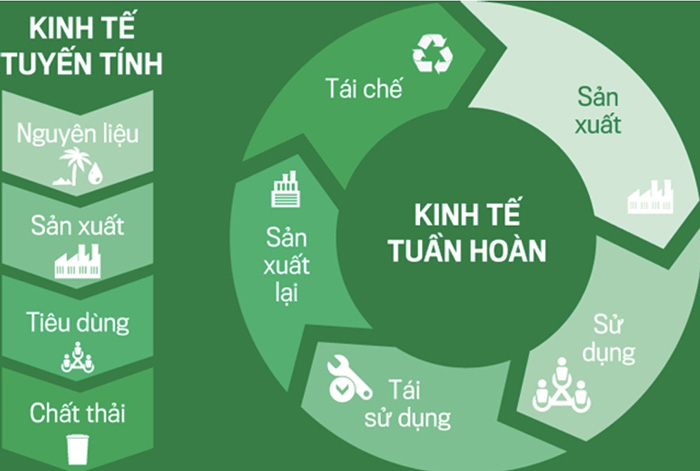
(Source: https://microbelift.vn/kinh-te-tuyen-tinh-khac-biet-kinh-te-tuan-hoan/)
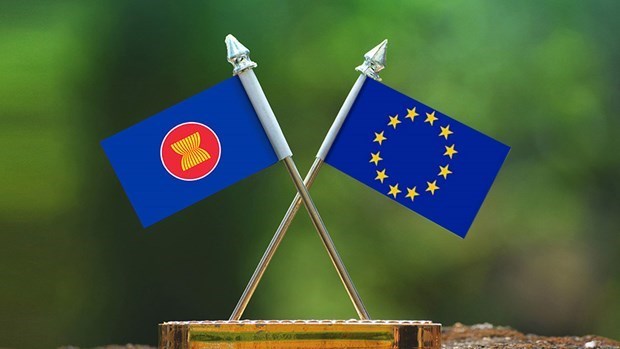
At the regional level, the Association of Southeast Asian Nations (ASEAN) officially adopted the Framework for Circular Economy for the ASEAN Economic Community in 2021, thereby establishing a long-term vision for the transition to a circular economy across the bloc. Meanwhile, the European Union (EU) early on developed the Circular Economy Action Plan as part of the European Green Deal, aiming towards carbon neutrality and decoupling economic growth from resource consumption. In 2022, the EU and ASEAN officially inaugurated the ASEAN Circular Economy Stakeholder Platform Secretariat in Bangkok, Thailand. Hosted at the ASEAN Centre for Sustainable Development Studies and Dialogue (ACSDSD), the Secretariat serves as a comprehensive mechanism for dialogue and knowledge sharing.
Given the similarities in orientation and transition needs, ASEAN-EU cooperation in the circular economy represents technical and financial support, reflecting a mutual learning process in development governance, green standards, and sustainable supply chain organization. Above all, the EU is a particularly vital strategic partner because it possesses an advanced circular economy policy ecosystem, while ASEAN-EU trade and investment relations are increasingly intertwined with green standards and sustainability requirements. Therefore, collaborating with the EU will help ASEAN bridge gaps in technical standards, recycling technologies, green financing, and skills for operating closed-loop supply chains.
2. Practical Implementation of Circular Economy Cooperation between ASEAN Countries and the EU
Building on regional cooperation, the EU and ASEAN have launched the "Green Team Europe Initiative: Transition to a Regional Circular Economy," funded by the EU in coordination with Denmark. This initiative aims to assist ASEAN in developing waste data collection tools, enhancing policy-making capacity, and fostering knowledge sharing among stakeholders. The practical implementation of circular economy cooperation between ASEAN countries and the European Union (EU) has yielded significant progress through a series of pilot projects and hands-on technical assistance. Under the funding and guidance of EU initiatives such as "Rethinking Plastics" and the EU SWITCH-Asia program, circular economy principles, including designing out waste, circulating resources, and utilizing materials efficiently, are being widely applied across the spectrum, from micro-enterprises to massive industrial parks.
a. Philippines
In the Philippines, cooperation with the EU is evident at both the enterprise and community levels. At the enterprise level, the Pico Sands Hotel and Pico de Loro Beach and Country Club, supported by EU SWITCH-Asia's technical assistance, stand out as prime examples. Since 2018, the hotel has implemented a food waste management system using the Bokashi composting method. This initiative has reduced average food waste per guest by 62% (dropping from 350-400 grams to just 111 grams in 2023) and diverted over 21 tons of food waste from landfills annually to be used as fertilizer for a 1,700 m² organic garden. This system has resulted in savings of 7.5 million PHP (approximately 125,000 Euros). Concurrently, replacing plastic bottles with glass pitchers and water filtration systems helped the hotel eliminate over 93,000 single-use plastic bottles in 2023.
At the community level, the "Wala Usik" (meaning "Nothing is wasted" in the local dialect) project is an initiative under the Rethinking Plastics project, funded by the EU and the German government. It aims to support micro, small, and medium enterprises (MSMEs) in adopting zero-waste business models in the Philippines. Through hackathons and awareness campaigns, the project has incubated innovative ideas that bring the circular economy into everyday life, such as plantable toothbrushes, biodegradable packaging made from agricultural waste, deposit-return systems for packaging.

Source: https://www.no-burn.org/vi/wala-usik-zero-waste-sari-sari-stores/
b. Indonesia
Also within the framework of the EU's Rethinking Plastics project, the "Less Plastic Waste in Indonesian Markets" campaign, implemented by the organization GIDKP, focused on tackling plastic waste in traditional markets in Bandung and Banjarmasin, Indonesia. Over its 17-month implementation period, the project engaged 350 vendors in Banjarmasin and 290 vendors in Bandung. By working directly with vendors and consumers, the project successfully persuaded them to use traditional packaging alternatives. The results showed that stalls reduced their plastic bag distribution by up to 27%, while the percentage of customers proactively bringing reusable bags increased from 13% to 42%. This initiative highlights the value of EU-ASEAN cooperation in establishing standardized processes for large-scale consumer behavior change towards plastic-free retail systems.
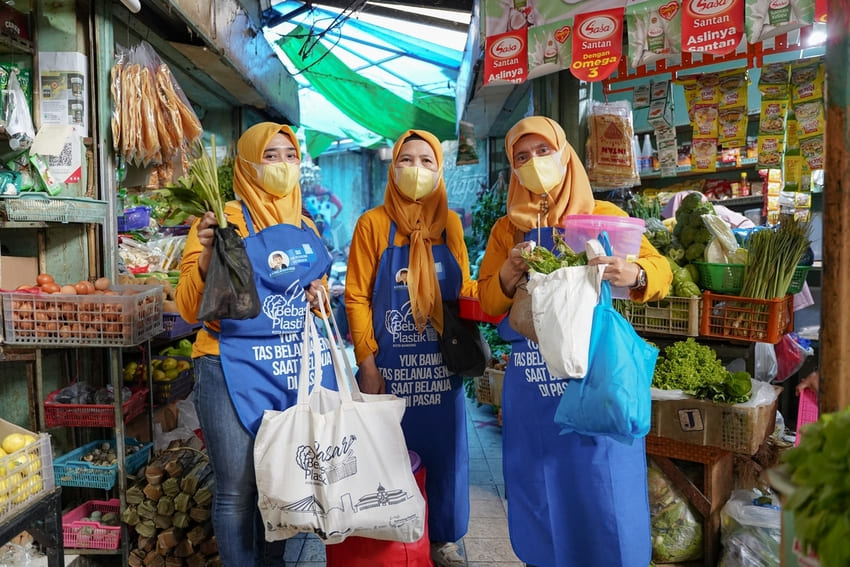
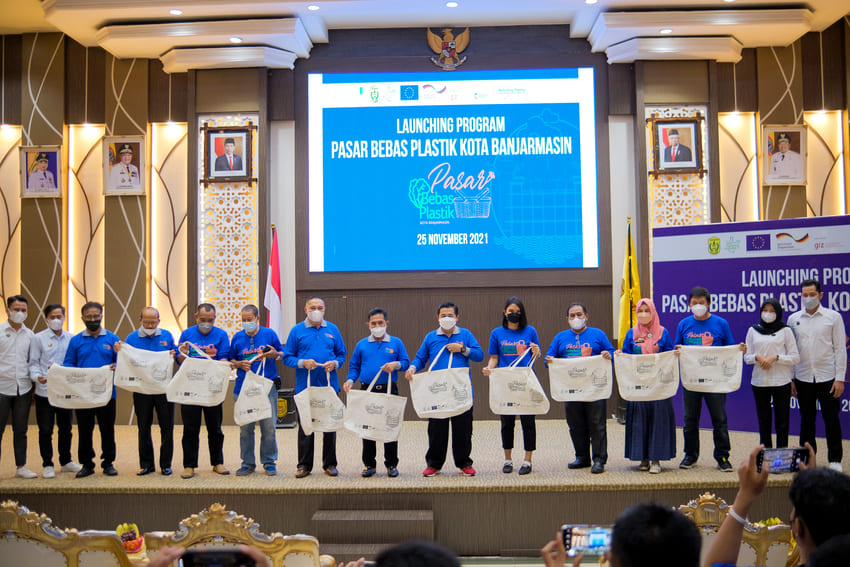
Source: https://rethinkingplastics.eu/pilot-projects-en/51-less-plastic-waste-in-indonesian-markets
On a larger industrial scale, Great Giant Foods (GGF), a canned pineapple producer and the largest banana producer in Indonesia, utilizes its processing residue as animal feed. It then leverages fertilizer and bioenergy recovered from livestock waste to power its plantations again, helping to reduce the carbon footprint of its products by 24-63%.
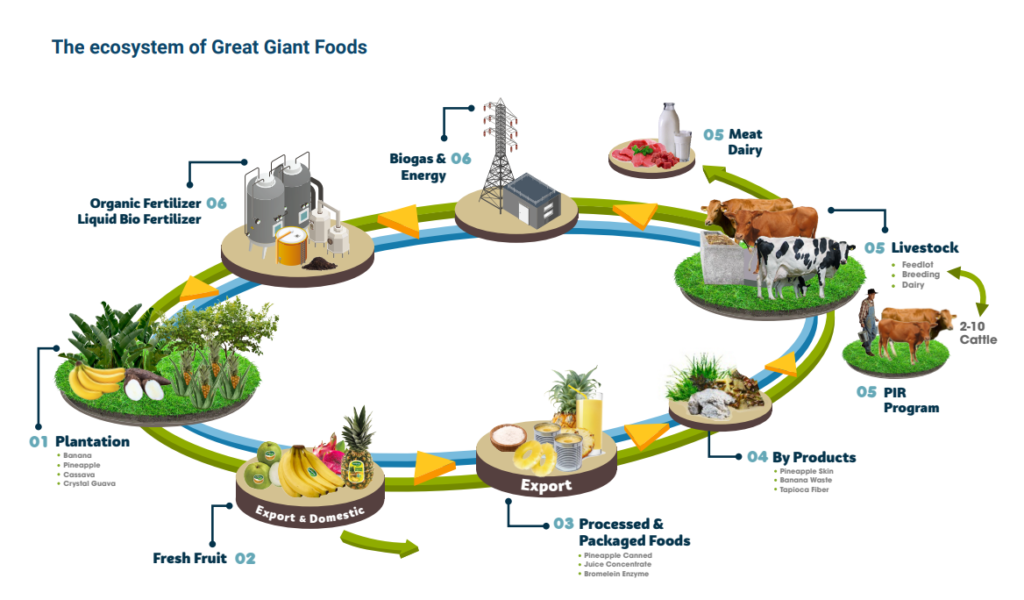
Caption: A closed-loop agro-industrial symbiotic cycle through 6 stages: (01) Plantation provides raw materials for (02) Fresh Fruit distribution and (03) Processed & Packaged Foods for export. Instead of being discarded, the system (04) utilizes By-Products like pineapple skins and cassava waste as eco-feed for (05) Livestock to provide meat and dairy. Finally, livestock waste is further processed into (06) Biogas Energy & Organic Bio Fertilizer to loop back and fertilize the plantation area (01), creating a zero-waste process.
(Source: https://www.aceba.co/site/assets/files/1196/great_giant_foods_indonesia.pdf)
c. Singapore and Malaysia
In Singapore and Malaysia, cooperation with the EU focuses more heavily on regulatory and technological innovation. Singapore has learned from the EU's frameworks for Extended Producer Responsibility (EPR) and plastic waste management to refine its national Zero Waste Masterplan. On the technological front, Nanyang Technological University (NTU) partnered with the French Alternative Energies and Atomic Energy Commission (CEA) to launch the SCARCE project, which researches solutions for recycling and recovering precious metals from electronic waste. In Malaysia, the ASEAN Circular Economy Business Alliance (ACEBA), with support from SWITCH-Asia, has organized multiple forums to showcase exemplary circular business models. At these events, numerous practical examples from Malaysian and regional enterprises were shared, such as Entomal Biotech, a Malaysian startup utilizing Black Soldier Fly (BSF) technology to convert food waste into insect protein and organic fertilizer, thereby closing the nutrient loop between the food and agriculture chains.
d. Thailand
In Thailand, the implementation of Circular Economy cooperation with the EU is shaped by the alignment between the country's Bio-Circular-Green (BCG) Economy Model and the European Green Deal. This collaboration goes beyond policy dialogues and extends into actual business practices through EU-supported projects. The case of Sivatel Bangkok Hotel emerged as a practical model when it proudly received the "Zero Carbon Resorts Award" in 2019, presented by the EU SWITCH-Asia Programme. Sivatel Bangkok positions its brand as a sustainable boutique hotel, aiming for a balance between business, social, and environmental values. A bright spot in Sivatel's circular strategy is the effective adoption and enforcement of a zero-food-waste policy starting in 2016. Rather than utilizing a traditional consumption model, the hotel operates a "smart procurement" process by working directly with a network of organic farmers and farming communities across Thailand. By strategically planning menus and ordering precise quantities, the hotel significantly minimizes excess food waste right from the source while helping farmers secure stable demand.
For food waste generated during preparation and service, Sivatel collects it to compost into fertilizer for the green vegetable and herb garden located right on the hotel's rooftop. Even more exceptionally, a portion of the food waste is used to feed black soldier fly (BSF) larvae at an in-house farm. These larvae, along with tens of thousands of eggshells and egg trays each year, are then returned by the hotel to organic chicken farms as animal feed, creating a seamless biological loop. By 2023, 70% of Sivatel's food ingredients (by value) were chemical-free, organic products. By 2023, Sivatel Bangkok had officially achieved its goal of becoming a zero-food-waste hotel. These efforts have proven that the circular economy delivers tangible economic benefits; although Sivatel cut its food costs by 30.7% in 2023, overall revenue still grew thanks to the strong appeal of its "green hotel" brand to travelers.

(Source: https://www.linkedin.com/posts/sivatelgreeninitiative-zerowastejourney-sustainableliving-ugcPost-7163059010450014209-KY9U/)
e. Vietnam
The entry into force of the EU-Vietnam Free Trade Agreement (EVFTA) in 2020 has established a robust, legally binding framework. Specifically, under pressure from the EU's Circular Economy Action Plan (CEAP) which includes the Carbon Border Adjustment Mechanism (CBAM) and strict standards regarding eco-design, packaging waste, and microplastics, Vietnamese enterprises are compelled to transition their production processes. The EU-Vietnam Sustainable Energy Transition Programme (SETP), featuring a total non-refundable grant of 142 million Euros for the 2022-2027 period, serves as one of the first critical financial tools tied directly to green and circular transitions in the energy sector. On a larger scale, the Just Energy Transition Partnership (JETP), in which the EU is a key international partner, has committed financial support for Vietnam to accelerate renewable energy development and phase down coal power. This lays the clean energy infrastructure foundation necessary to operate low-carbon circular production chains. Additionally, the European Chamber of Commerce in Vietnam (EuroCham) regularly issues policy recommendations on reducing plastic pollution and promoting sustainable production-consumption models.
At the implementation level, EU-funded initiatives have created a direct and observable impact on the manufacturing sector, particularly for small and medium-sized enterprises (SMEs). The project "Circular Economy for Cocoa: From Bean to Bar" (2022-2026), under the SWITCH-Asia program and implemented by Helvetas and the Center for Community Development (CDC), supports farmers in the Central Highlands in applying biomass gasification technology using cocoa pod husks. This helps cut energy costs by 60-80%. The waste cocoa husks are then pyrolyzed into biochar for soil amendment, forming an agricultural circular loop while concurrently enhancing the brand value of export products.
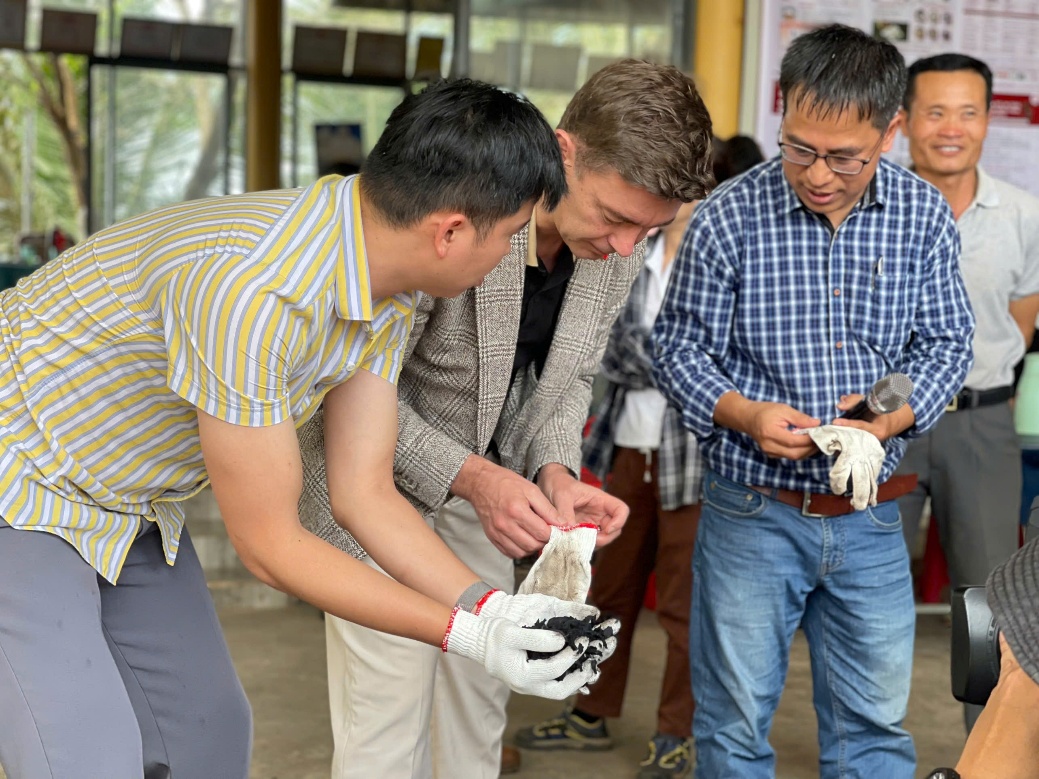
Source: https://www.switch-asia.eu/news/circular-economy-in-action-pioneering-sustainable-cocoa-value-chains-in-vietnam
At the MSME scale, the entrepreneurial spirit is also resonating strongly with green consumption trends. For example, the company Buyo Bioplastics has utilized biotechnology and advanced material science to convert organic waste (brewer's spent grain, agricultural by-products) into biodegradable bioplastics, offering a viable alternative to conventional plastics on the market.
3. Conclusion
The transition to a Circular Economy aims to achieve economic progress, global integration, and long-term sustainability for ASEAN countries. Despite clear awareness, the region still encounters numerous hurdles regarding investment capital, barriers to technology transfer, a reliance on the informal waste management sector, and the capacity to drive societal behavioral change. It is within this context that cooperation with the EU is helping ASEAN construct a relatively solid foundation. Moving forward, ASEAN governments need to continue deepening policy dialogues with the EU, replicating successful business models, and further materializing legal commitments. Close coordination among governments, business alliances, and international technology partners will support the ASEAN bloc in resolving the problems of waste and resource degradation, guiding its rise to become a green, prosperous, autonomous, and sustainably developed economic region.
REFERENCE
1. Ellen MacArthur Foundation. (2013). Towards the circular economy Vol 1. Ellen MacArthur Foundation. Truy cập tại https://content.ellenmacarthurfoundation.org/m/27265af68f11ef30/original/Towards-the-circular-economy-Vol-1.pdf (truy cập ngày 05/06/2026)
2. Lê Nguyễn Diệu Anh. (2025). “Kinh tế tuần hoàn: Động lực cho phát triển bền vững ở Việt Nam”. Tạp chí nghiên cứu Tài chính kế toán. Số 299. https://doi.org/10.71374/jfarv.v25.i299.08
3. Press and Information team of the Delegation to ASEAN. (2022). From linear to circular: EU and ASEAN inaugurate Stakeholder Platform Secretariat to boost region’s circular economy. European Union External Action Service. Truy cập tại https://www.eeas.europa.eu/delegations/association-southeast-asian-nations-asean/linear-circular-eu-and-asean-inaugurate_en?s=47 (truy cập ngày 15/06/2026)
4. Press and Information team of the Delegation to ASEAN. (2025). ASEAN-EU green team Europe initiative: Transition to a regional circular economy. European Union External Action Service.
5. EU SWITCH-Asia Programme. Circular economy business case studies in Southeast Asia: Pico Sands Hotel and Pico de Loro Beach and Country Club. Sustainable Resort Operations.
6. EU SWITCH-Asia Programme. Circular economy business case studies in Southeast Asia: Pico Sands Hotel and Pico de Loro Beach and Country Club. Sustainable Resort Operations.
7. Wala Usik – Nothing is wasted – Rethinking Plastic, truy cập tại https://rethinkingplastics.eu/pilot-projects-en/91-wala-usik-economy-nothing-is-wasted (truy cập ngày 07/06/2026)
8. Rethinking Plastics. Less plastic waste in Indonesian markets. Truy cập tại https://rethinkingplastics.eu/pilot-projects-en/51-less-plastic-waste-in-indonesian-markets (truy cập ngày 09/06/2026)
9. ASEAN Circular Economy Business Alliance. (2023). Framework for business action for the circular economy in Southeast Asia. EU SWITCH-Asia Programme.
10. Krishnan, S., & Richer de Forges, S. (2020). Circular economy in Singapore policy brief. GA Circular & Expertise France.
11. SWITCH-Asia. (2025). Circular economy: A responsible business and innovation opportunity for Malaysian businesses.
12. U SWITCH-Asia Programme. (2024). Circular economy business case studies in Southeast Asia: Sivatel Bangkok Hotel. Truy cập từ https://www.switch-asia.eu/site/assets/files/4122/sivatel_thailand.pdf (truy cập ngày 10/06/2026)
13. EU SWITCH-Asia Programme. (2024). Circular economy business case studies in Southeast Asia: Sivatel Bangkok Hotel. Truy cập tại https://www.switch-asia.eu/site/assets/files/4122/sivatel_thailand.pdf (truy cập ngày 10/06/2026)
14. EU SWITCH-Asia Programme. (2024). Circular economy business case studies in Southeast Asia: Sivatel Bangkok Hotel. Truy cập tại https://www.switch-asia.eu/site/assets/files/4122/sivatel_thailand.pdf (truy cập ngày 10/06/2026)
15. Eunomia Research & Consulting. (2023). Impacts of EU circular economy policies in third countries: An exploratory study of the electronics and vehicles sectors in Vietnam and Nigeria. European Environmental Bureau.
16. Bộ Công Thương. (2022). Hiệp định tài chính Chương trình chuyển đổi năng lượng bền vững Việt Nam-EU. Báo Công Thương. Truy cập tại https://moit.gov.vn/tin-tuc/hoat-dong/hoat-dong-cua-lanh-dao-bo/hiep-dinh-tai chinh-chuong-trinh-chuyen-doi-nang-luong-ben-vung-viet-nam-eu.html (truy cập ngày 11/06/2026)
17. European Commission. (2023). Resource Mobilisation Plan: Implementing Viet Nam’s Just Energy Transition Partnership (JETP). Truy cập tại https://climate.ec.europa.eu/system/files/2023-12/RMP_Viet%20Nam_Eng_%28Final%20to%20publication%29.pdf (truy cập ngày 12/06/2026)
18. SWITCH-Asia. Circular economy in action: Pioneering sustainable cocoa value chains in Vietnam. European Commission. Truy cập tại https://www.switch-asia.eu/news/circular-economy-in-action-pioneering-sustainable-cocoa-value-chains-in-vietnam/ (truy cập ngày 12/06)
Leave A Comment